
Why “Resilient” High Performers Burn Out the Hardest
Jun 30, 2026
If you’ve spent your whole life being the strong one, I want to tell you something before we go any further: some of what you call resilience might actually be self-abandonment wearing a more acceptable name.
I’ve been fascinated by resilience for as long as I can remember.
Not in the abstract, academic way — although that came later. In the very specific, very personal way that a kid gets fascinated by something because their own life is immersed in the reality of it.
I grew up in a home with real struggles. I left home at 15 due to an unstable environment. Battled the Canadian Government every semester for OSAP to help fund my University degree. And from pretty early on, I remember wondering: why do some people seem to find a way through almost anything, while other people come apart? What was the difference? Was it something you were born with? Something you learned? Could you lose it? Could you build it? My curiosity wasn’t in a judgemental way. I was genuinely curious about the mechanism under the surface.
That question never left me. By the time I got to university, it had a name — risk vs resilience — and it became the thing I actually wanted to spend my life studying. I originally planned on studying it at the doctoral level before life took me down a different road (by way of an opportunity to travel Australia for a year!). But the question itself never changed. I just kept studying it differently — first as a mental health counsellor, then through positive psychology, Human Design, ADHD, nervous system science, and somatic work.
And somewhere in all those years, sitting across from people, and somewhere in my own life too, I started noticing something that I don’t think gets said enough.
Some of what we call resilience isn’t actually helping us. It’s quietly teaching us to abandon ourselves. It took one of the hardest years of my life, and profound soul crushing grief, to expose that pattern hiding in the shadows under the surface.
I See This in High Performers Constantly. I Also See It in Myself.
I want to say clearly: resilience is real, and it matters, and it has carried people — carried me — through things that absolutely should have broken us. Resilience IS a positive copying mechanism. This isn’t a takedown of resilience. It’s not about anyone having the ‘wrong kind.’ I don’t think there’s anything wrong with you if this is your story. I think it’s one of the most human stories there is for high performers.
What I’ve noticed, in my work and in my own life, is that there seem to be two very different experiences hiding inside that one word.
One of them I’ve started calling Survival Resilience. It’s the kind that develops when, somewhere along the way — through trauma, through childhood, through a culture that only seemed to value certain things — your nervous system learns that being loved, being safe, being enough, depends on overriding yourself. You learn to push past exhaustion in the name of being “strong” or “successful”. To override intuition by absorbing bad behaviour or flawed systems. To swallow the emotion because somebody has to hold it together. To keep going because stopping has never once felt safe.
From the outside, it looks like strength. Often it is. People build entire lives on top of it — careers, families, identities they’re genuinely proud of.
From the inside, it can feel like living with a quiet, constant rule that you’re never allowed to break: don’t stop.
The very thing that helped you survive one chapter of your life can quietly become the thing keeping you from actually living the next one.
I think a lot of us learned this kind of resilience honestly. We didn’t choose it out of a catalogue of options. It was often the only thing available at the time, and it worked. That’s not nothing. That deserves real respect, not judgment.
But I also think there’s a second kind of resilience that doesn’t get talked about nearly enough — one I’ve come to think of as Restorative Resilience.
This kind doesn’t ask you to ignore pain. It asks you to actually listen to it and fully process before moving on. It treats rest not as the opposite of resilience but as one of the very things that makes resilience sustainable in the first place. It lets you adapt, rather than just endure. It notices, gently, when the strategy that once saved you has quietly become the thing that’s hurting you now. And maybe most importantly — it trusts that reaching out for support is a sign of wisdom, not a sign that you’ve failed.
I often have clients come to me saying “I don’t want to be resilient anymore, I’m tired of being resilient” when resilience itself was never the problem.
Why I Think This Happens — And Where I’ve Found the Most Movement
I don’t think burnout is just about doing too much. I think, more often, it’s the accumulated cost of becoming truly skilled at leaving yourself behind.
We’ve spent a long time, as a culture, celebrating the people who can push past hunger, past exhaustion, past their own emotions and instincts, in the name of getting it done. So it shouldn’t really surprise us when those same people wake up one day and realize they don’t quite know what they feel anymore, or what they actually want, separate from what they’ve been taught to want.
In my own work, I’ve come to believe this disconnection happens because, for a lot of us — whether through trauma, through the home we grew up in, or simply through a culture that only ever rewarded one way of operating — we become deeply left-brain dominant. The analytical, logical, sequencing part of us takes the lead, because at some point it had to. And the right side — the part of us that feels, that senses safety in the body, that knows things before we have words for them — gets quieter and quieter. (For more on this topic I recommend reading this article HERE.)
Here’s the part I find most interesting, and most tender. When that happens, even resilience itself becomes a logical process rather than a felt one. It’s no longer a felt sense of safety, of having actually moved through something. It becomes a definition you’re performing — suck it up, hold it together, push through — while the actual emotion underneath gets pushed further and further down.
In my work with high performers specifically, I’ve found one of the most powerful places to begin gently reopening that connection is through the Venus Sequence in the Gene Keys system — a body of work centred entirely on opening the heart. For people who have spent a lifetime, often for very good reason, leading from the analytical mind, this work offers a way back into feeling that doesn’t require reliving the original wound. It’s not about forcing yourself to feel. It’s about slowly making it safe enough to.
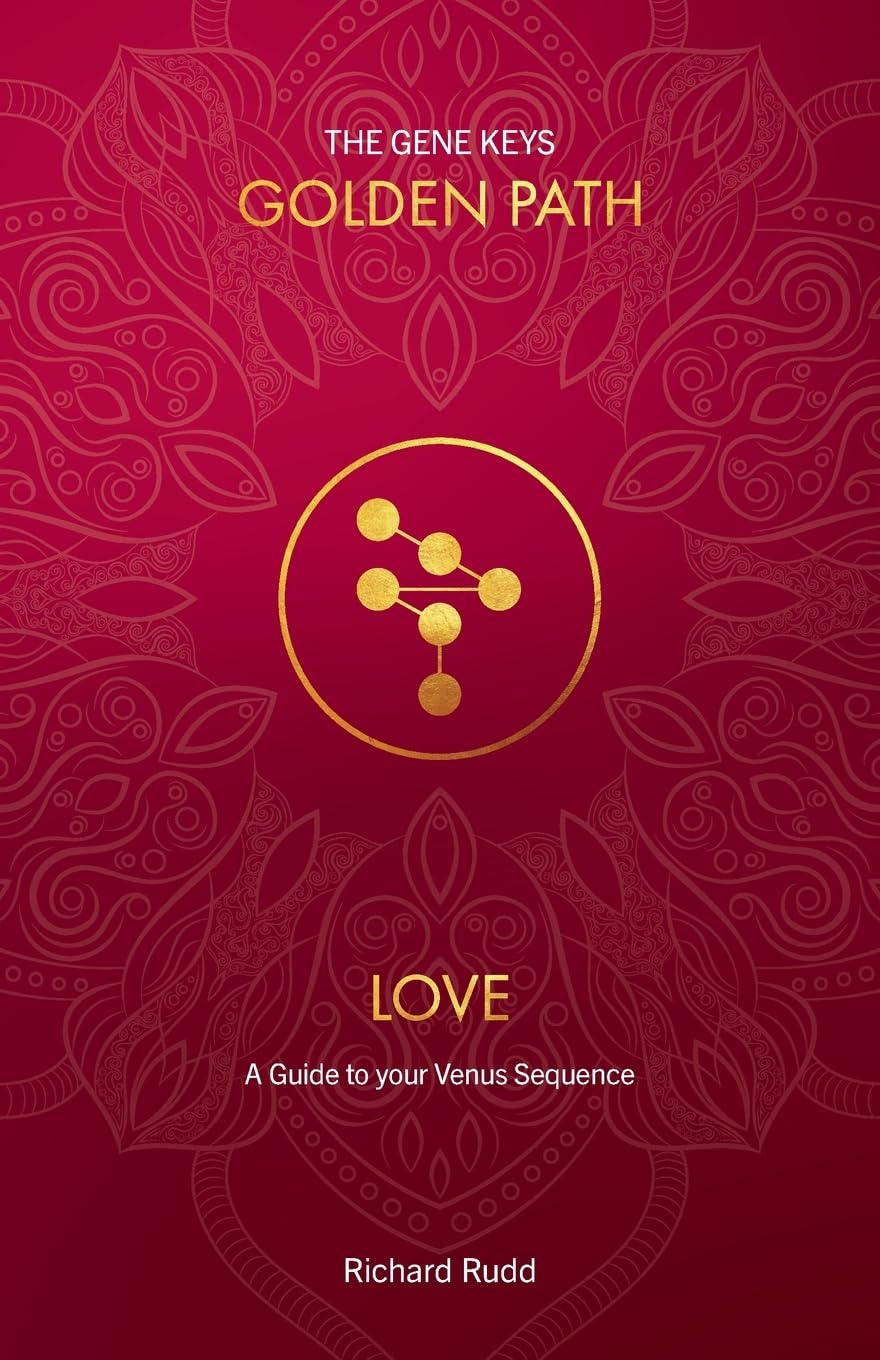
(Don’t know your Gene Keys Hologenetic Profile? Learn more HERE.)
This is the thread underneath almost everything I do now, in one form or another. I’ve come to call it The Restoration of Body Intelligence.
The idea is simple, even if living it isn’t always easy. Before we learned who we were supposed to be. Before we absorbed what success was meant to look like. Before we learned to override our own bodies to stay safe, or loved, or simply okay — we already had an extraordinary intelligence. It was never missing. It’s still there, in the gut, in the heart, in the nervous system, communicating constantly, long before the thinking mind catches up.
Gene Keys gives us the map to understanding our shadow patterns, the core wound that drives us, and a way out into the light.
The work was never about becoming someone new.
It’s about finding our way back to what we already knew.
Maybe the goal was never to become more resilient. Maybe it's to become more connected.
A Different Question

Instead of asking how resilient you are — which tends to just produce a list of everything you’ve survived — I want to offer a gentler question.
What has your resilience cost you?
Because resilience that asks you to abandon yourself can absolutely help you survive. I lived that. I’m not pretending otherwise, and I’m not saying you should regret it. For a long time, for a lot of us, it was genuinely the only option there was, and it did exactly what it needed to do.
But survival and flourishing aren’t the same thing.
This is actually one of the founding distinctions in positive psychology. Martin Seligman, who’s often credited as the father of the field, made a point early on of separating the absence of suffering from the presence of genuine wellbeing. You can be functioning. You can be achieving. You can, by every visible measure, be doing fine — and still not be flourishing. Those aren’t opposites on the same scale. They’re two different things entirely, and you can be high on one and starving on the other for years without anyone, including you, noticing the difference.
I think that’s exactly what survival resilience produces. A life that looks like flourishing from the outside, built almost entirely on the absence of falling apart, rather than the presence of feeling genuinely alive.
And here’s where it stops being just a psychological idea and becomes something physical, something you can actually work with in the body. Polyvagal theory — the work of Dr. Stephen Porges — has shown that our capacity to rest, to connect, to feel safe enough to stop bracing, isn’t just a mindset. It’s a nervous system state. A specific, physiological condition called ventral vagal activation, where the body finally registers that it’s safe enough to come out of defence.
Survival resilience, by its nature, keeps us out of that state. It’s built on vigilance — on staying ready, staying braced, staying one step ahead of collapse. Which means the body often doesn’t get the chance to ever fully exhale, even when life looks calm on paper.
Restorative resilience is what becomes possible once the nervous system has enough safety to let that guard down. Not because you’ve finally earned a break, but because your body has learned, slowly and through real evidence, that it’s allowed to stop scanning for the next thing it has to survive.
That, to me, is the real shift. Not pushing harder, and not giving up. Building enough safety, in the body and in the life around it, that resilience stops being something you force — and starts being something that’s simply available to you, the way it was always meant to be.
When you look back over your life, what parts of your resilience genuinely protected you — and what parts quietly taught you to abandon yourself?
I’d love to hear your story, if you feel like sharing it.
Ashley
Founder The Radical Happiness Movement
If this resonated and you’d like to speak further, you can reach me directly at [email protected]
Ashley Briana Eve is the founder of The Radical Happiness Movement and creator of The Body Intelligence Map™. Her work, The Restoration of Body Intelligence™, integrates nervous system science, Positive Psychology, Human Design, and embodied practice to help people move beyond survival and rediscover the intelligence of the human body. Through her writing, speaking, education, and research, she helps individuals and organizations restore body intelligence so they can live with greater joy, purpose, and alignment.
Find her at ashleybrianaeve.com | Ashley Briana Eve on Substack | The Radical Happiness Podcast I ADHD + HD Podcast
Author


