Losing Your Identity After Trauma or Burnout and How to Reclaim It
Aug 01, 2026
Have you ever lost the thing that made you feel most like yourself — and instead of grieving it, quietly spent years telling yourself you were “too old,” “too busy,” or “just not that person anymore”?
Me too.
I’ve been thinking a lot lately, after coming out of the genuinely traumatic haze of 2025. While it is easy to ask myself “where did the wheels come off the bus” instead I’ve taken a gentler approach with myself, thanks to Positive Psychology.
While we will get to the science I would love if you could first come with me on my personal journey through loss, heartbreak, and reclaiming identities long thought forgotten. My hope is that you see yourself in my journey, even if you can’t relate to the athlete identity or moments that define mine.
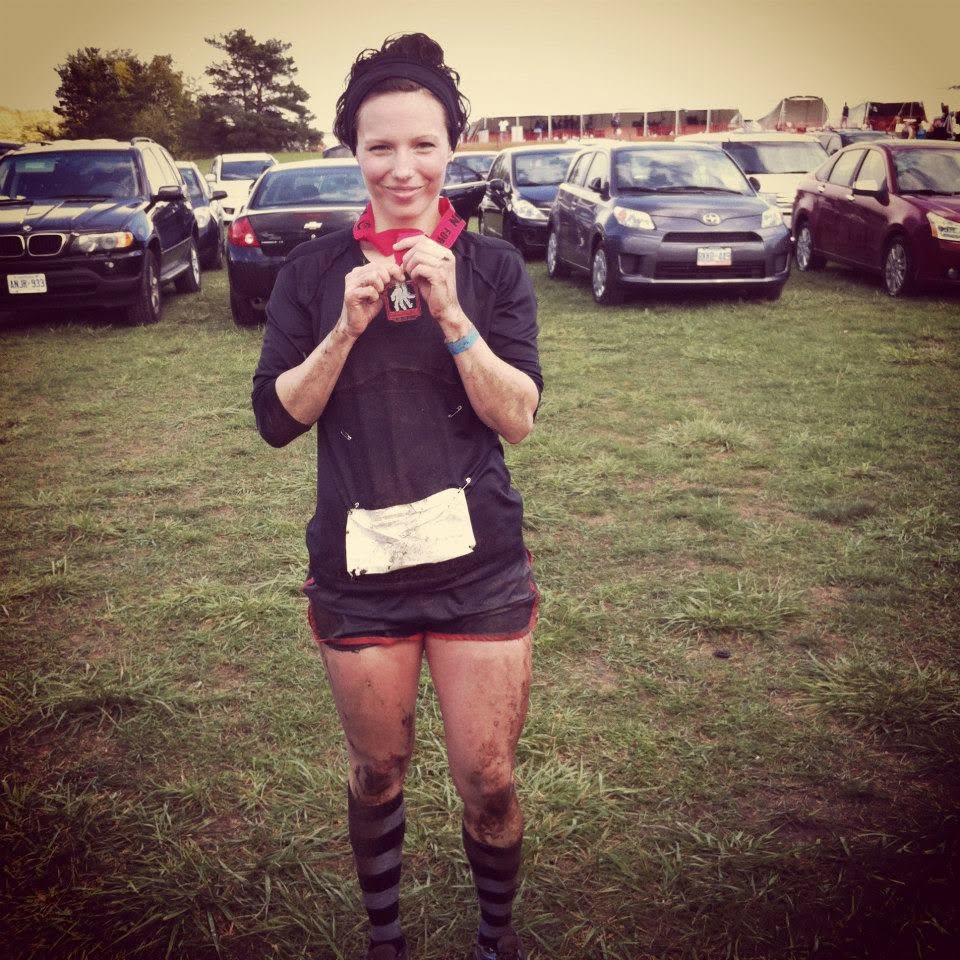
For the last ten years I could not work out for fun. I would wobble back and forth between starting an exercise routine and stopping. Going all in and quitting. It would have been easy to write it off as “my ADHD”. I did, often, just tell myself I was getting older and I had to settle for pilates or something similar.
This doesn’t come from a non athletic background. I’ve been a competitive athlete since I could walk. Figure skating. Equestrian sports. Track and field. Evolving into trail racing, bodybuilding, and CrossFit as an adult. None of which done for fun. All done for competition.
I found personal training when I was a mental health counsellor after realizing the benefits of training for my own mental health. I then shared movement with teens & children I worked with in after school programs and group homes. This led to my own personal training studio, strong.ER, while coaching CrossFit at local boxes. I became a contributor for magazines in the CrossFit & Equestrian worlds while quickly being sought out to train athletes.
My career took off seemingly overnight and it was more than I could have imagined.
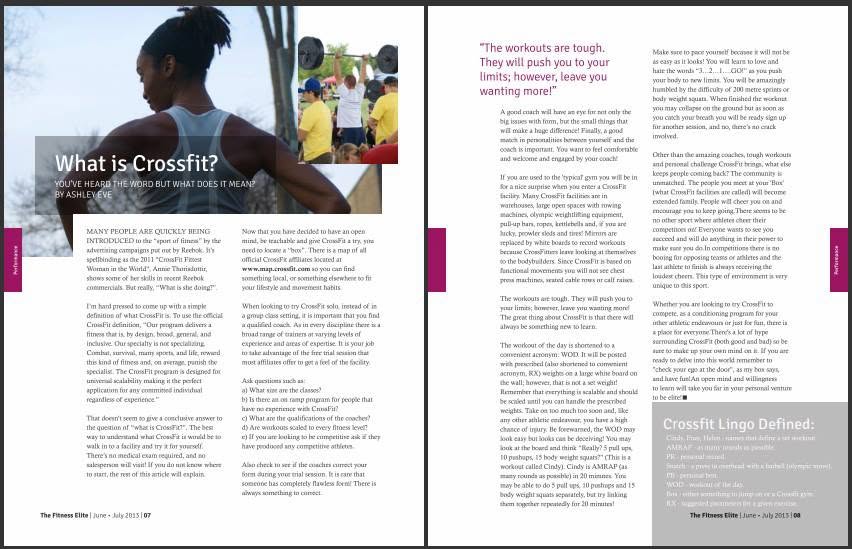
Only a year after starting CrossFit I had my eyes on a top 5 placement at Regionals. I suppose, if I was to identify the place the wheels got loose… this would be it. If there was a movie made about my life this would likely be the moment for dramatic music and flashbacks of devastation.
Today I want to tell you what actually happened when I lost that outlet, what it took to get it back, and why I think almost everyone reading this, or listening to this, has their own version of “the thing that got ripped from their hands” — and has spent years quietly building a life around the hole it left.
The Injury
In preparation for regionals I had a deloading week in my program. The problem was I didn’t listen. I was excited about my training, enjoying hitting new skills, and excited to compete with athletes I looked up to. I pushed through…and added extra training one day.
In the middle of a deadlift my back gave out. Not a little. Horribly. I immediately went straight to the emergency room while desperately texting my sports medicine doctors.
The diagnosis? Herniated L5 S1 and such extensive soft tissue damage I required an SI brace. Not a back brace. An SI brace so that my hips could function properly. I also ended up with a bicep tendon tear and labrum tear.
Here’s what nobody tells you about an injury like that: the physical part is the easy part to talk about. You can explain a herniated disc. You can show people a scan. What’s much harder to explain — and what I didn’t have language for until very recently — is what it does to your identity when the thing that gave you joy, mastery, accomplishment, purpose, and an outlet for every bit of extra energy your ADHD brain generates, just isn’t available to you anymore.
Up until recently I didn’t say “I’m devastated.” I said “I’m too old.” I said “I can’t get back into it at this point.” I said a lot of practical-sounding sentences that were actually grief wearing a business casual outfit.
What I Was Actually Losing
Here’s the reframe that changed everything for me, and it came only recently, coming out the other side of a genuinely brutal 2025 — a year that included real burnout and some experiences that were, honestly, traumatic. Not “hard.” Traumatic.
Somewhere in doing my own nervous system work — the exact work I coach other people through — I finally understood what training had actually been giving me for all those years before the injury. It wasn’t just movement. It was gratitude for my health. It was joy. It was accomplishment and mastery. It was passion, community, and purpose, stacked into one activity. And if you know anything about ADHD brains, it was also an outlet — a legitimate, built-in source of novelty and dopamine that my brain was quietly, chronically starved of for a decade without that outlet.
So when the injury took training away, it didn’t just take away a hobby. It took away my primary channel for almost every positive emotion I had reliable access to (and my career!). No wonder I spent ten years calling it “too old” and “not realistic.” Those were smaller, safer things to grieve than the truth, which was: something that held that much of my joy, meaning, identity, and regulation got ripped out of my hands, and I never actually let myself feel how devastating that was. And in not feeling the emotions I wasn’t able to access how I could exist within the field even if things looked differently.
A Side Quest
Now, before we go any further I want to say this:
I GENUINELY believe everything happens for a reason and that we are exactly where we need to be. It’s why I have been so transparent on my entrepreneurial journey. I never want people to have the illusion they are a failure or aren’t cut out for it if there are lows as well as highs. Life isn’t sunshine and rainbows. We mess up. We “know better.” We make emotional decisions. We make the wrong decisions. It’s all a part of our journey. Anyone that says otherwise is filtering out the bad to create an illusion of perfection and control.
How do I know? I’ve met a lot of those people behind the scenes and been shocked at the reality.
In fact, I was thinking lately about all the people I hire, buy from, or watch. They are transparent about their journeys. There is something so calming about seeing a Psychiatrist still struggle with ADHD. An elite athlete still struggle some days with going to the gym to train. A Positive Psychology researcher admit that they too require intentional work on cultivating gratitude and happiness.
It is a reminder for all of us: We are human doing the best we can on any given day.
Go easy on yourself.
The Positive Psychology Science: Broaden & Build, Conservation of Energy Resources, and Athletic Identity Foreclosure
To understand the science we have to be able to sit with our emotions and what is below the surface of our excuses. This requires radical self honesty without being wrapped in guilt or shame. The process I went through is a documented mechanism, and knowing it is what finally let me stop calling my ten years “I’m too old” and call it what it actually was.
First piece: broaden-and-build, from researcher Barbara Fredrickson. Negative emotions are easy to explain — fear narrows your focus onto a threat, gets your body ready to fight or run. Useful in a crisis, terrible as a default for a whole life. Fredrickson found positive emotions do the opposite — they broaden your attention, your thinking, your openness to people and possibilities, measurably. And that broadened state doesn’t evaporate when the feeling fades. It builds — relationships, skills, resilience banked for later. She and researcher Thomas Joiner tracked this over time and called it an upward spiral: positive emotion broadens your coping, broader coping generates more positive emotion, and it compounds. Training, for years, was that upward spiral running in the background of my whole life.
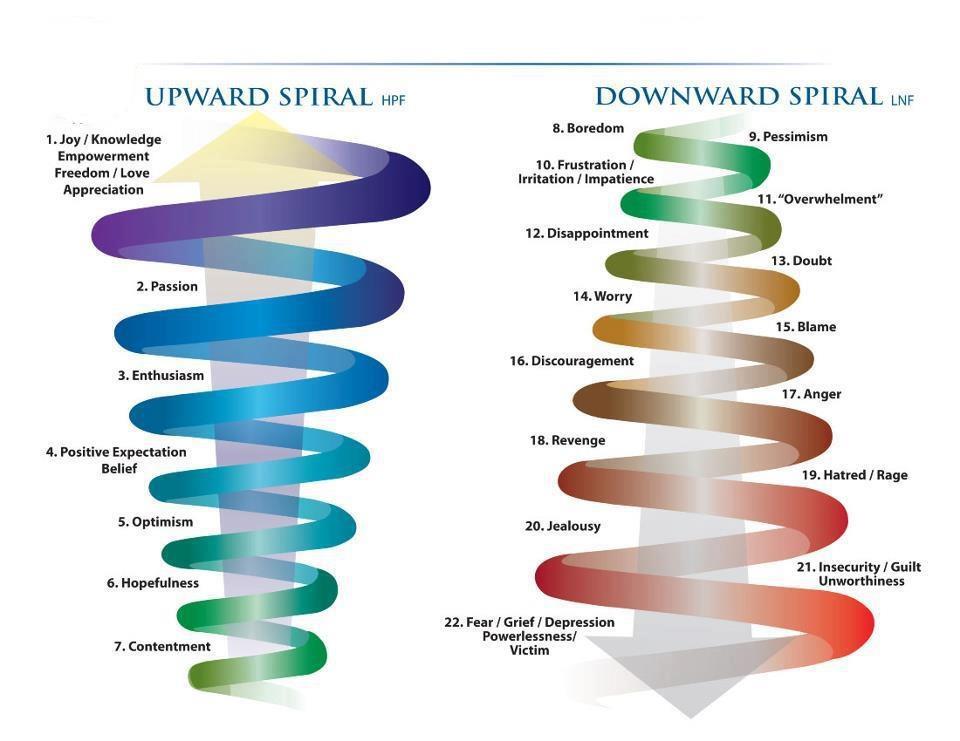
Second piece, and this is where it turns around: psychologist Stevan Hobfoll’s Conservation of Resources theory. His core finding — losing a resource hits you psychologically two to four times harder than gaining an equivalent one helps you. Loss and gain were never symmetrical. And when losses come faster than you can replenish, or one loss drains the exact resources you’d need for the next one, you get what he calls a loss spiral — not a linear decline, an accelerating one. He later applied this directly to trauma and found repeated traumatic experiences produce exactly that: a measurable, compounding spiral of loss.
So put those two together — an upward spiral running for years, then reversed in one afternoon into the exact loss spiral Hobfoll describes. Same system, opposite direction.
Third piece, specific to my story and maybe to yours if you were a competitive athlete: athletic identity foreclosure. It’s a documented phenomenon in sport psychology — what happens when someone builds their identity almost entirely around the athlete role without ever exploring who they are outside of it. When that role disappears, research consistently shows injured athletes have measurably higher rates of anxiety and depression than both the general population and their non-injured peers, and identity loss itself keeps showing up as one of the most common effects researchers find.
Stack all three and it helps explain the psychological mechanisms at play when life takes a dramatic turn in an unexpected direction. I didn’t just lose a hobby in one afternoon. I lost the upward spiral that had been quietly building my resources for years, I lost the role that had been organizing my entire sense of self with no backup plan for who I was without it, and — without ever fully metabolizing either loss — I walked into trauma in later years with far less capacity in reserve than I realized. That’s not a coincidence, and it’s not a personal failing. That’s three separate, well-documented mechanisms, converging on one person, doing exactly what the research says they do.
Why Knowing This Didn’t Fix It
Here’s the part I need to be honest about, because my background is in positive psychology. I’ve known the research above, in some form, for years. And knowing it did not fix anything.
There’s a name for that gap — actually, a couple of them. One is what psychologists call the G.I. Joe fallacy, after the old cartoon PSA line “knowing is half the battle.” It isn’t. Awareness explains almost none of the distance between understanding something and actually living differently because of it. The other is a real defense mechanism with a real clinical name: intellectualization — using analysis and reasoning to keep an emotional truth at a safe, abstract distance instead of actually feeling it.
I did both, for years.
I wondered if it was childhood conditioning, that my parents pushed me into sports too hard, that I was “too attached” to being an athlete and needed to grow out of it. Every one of those was a real, thoughtful, psychologically literate sentence. None of them required me to actually sit with how much I’d lost overnight. That’s what intellectualization is for — it’s not lying to yourself, it’s just staying in your head where it’s safer. The problem is the more we live in the left hemisphere of the brain to avoid the emotions the more we cut ourselves off from creative solutions.
Yet, honestly, this is the piece I most want people reading or listening to this to take away: you can logically know something and still be nowhere near living it, and that gap isn’t a character flaw or a discipline problem. It’s the difference between knowledge that lives in your thinking brain and change that has to happen somewhere else — in the body, through repetition, through actually feeling what you’ve been narrating around instead of just naming it correctly.
You Don’t Always Have to Heal Past Something
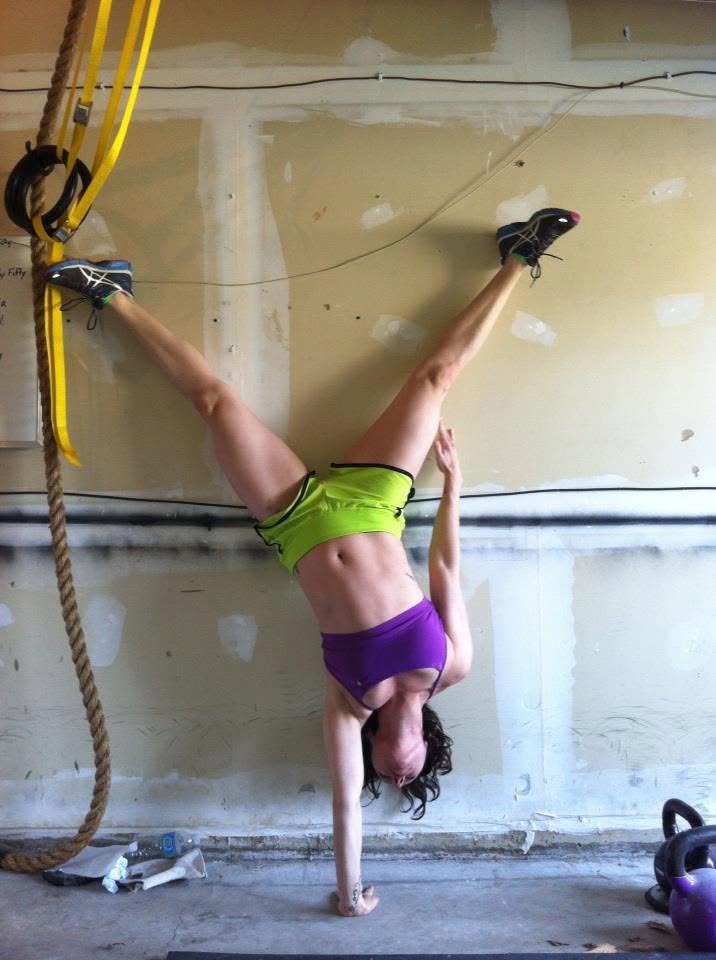
There’s one more thing I had backwards for a long time, and I think a lot of people doing their own healing work get it backwards too: I kept treating “athlete” being a huge part of my identity as something I needed to fix, outgrow, or heal past. As if the goal was to eventually not care about it so much.
It’s not. Some things aren’t a wound you move past. They’re just true about you, and the work isn’t detachment — it’s redefinition. Being an athlete doesn’t have to look the way it did in my 20’s or early 30’s for it to still be real. As a masters athlete now, I get to decide what “athlete” means to me at this stage of my life. I get to make new rules. That’s not a consolation prize for the identity I lost. It’s the same identity, still mine, on different terms I actually get to choose this time.
If something is genuinely still important to you, you don’t owe anyone a healing arc that ends with you caring less about it. Sometimes the work isn’t letting go. It’s redefining, on your own terms, what holding onto it gets to look like now.
Coming Back After Burnout
Getting back into training recently has done two distinct things for me, and I want to separate them, because I think the second one matters more than the first.
The obvious one: it brought the feelings themselves back. The gratitude, the joy, the accomplishment, the outlet. The ability to push myself past my limits in a way that isn’t just intellectual or business oriented. That part barely needs explaining.
The less obvious one taught me something I think most of us have backwards. We spend an enormous amount of energy searching for meaning and purpose “out there” — some undiscovered, overarching thing we’re supposed to go find, usually somewhere new. And sometimes the honest truth is so much simpler, and so much closer, than that. Sometimes it isn’t a new direction at all. Sometimes the meaning and the emotional expansion you’re looking for isn’t waiting somewhere you haven’t been yet — it’s something from your own past, something you never actually let yourself grieve losing, still sitting exactly where you left it, waiting for you to come back for it.
Sure, maybe you are a little more grey as you return to it. Slightly more bruised. But as my favourite poem, William Ernest Henley's Invictus, says:
Out of the night that covers me,
Black as the Pit from pole to pole,
I thank whatever gods may be
For my unconquerable soul.
In the fell clutch of circumstance
I have not winced nor cried aloud.
Under the bludgeonings of chance
My head is bloody, but unbowed.
Beyond this place of wrath and tears
Looms but the Horror of the shade,
And yet the menace of the years
Finds, and shall find, me unafraid.
It matters not how strait the gate,
How charged with punishments the scroll,
I am the master of my fate:
I am the captain of my soul.
What I Want You to Sit With
If something that once gave you joy, mastery, accomplishment, or purpose has been taken from you I want you to actually let yourself feel how devastating that loss was. Not minimize it. Not rename it into something smaller and safer, the way I spent ten years calling mine “getting older” instead of what it actually was: a genuine, significant loss that I could redefine and revisit at any time.
Those smaller sentences do a lot of protective work. They also quietly keep you from either grieving what’s gone or reclaiming what’s actually still available to you.
Sometimes the broadening you’re looking for isn’t a new direction. Sometimes it’s going back for something you left behind before you were ready to leave it.
If any part of this landed — if you’ve got your own version of the thing that was ripped from your hands, and you’re ready to either reclaim it or build the nervous system capacity to actually feel what it cost you to lose it — that’s the work I do.
If it’s the physical side, rebuilding real performance and capacity in your body, that’s strong.ER Performance Coaching.
If it’s the nervous system side — building the capacity to hold your own life again — that’s strong.ER Nervous System Coaching.
Both just opened to the public after previous clients snagged the first few spots.
Learn more about Performance Coaching HERE.
Learn more about Nervous System Coaching HERE.
The goal isn’t perfection. The goal is expanding capacity and uncovering what is true for you in this moment.
ashley
