Who Is Ari Emanuel? The Man Behind Hollywood’s Most Powerful Enforcement Network
Apr 30, 2026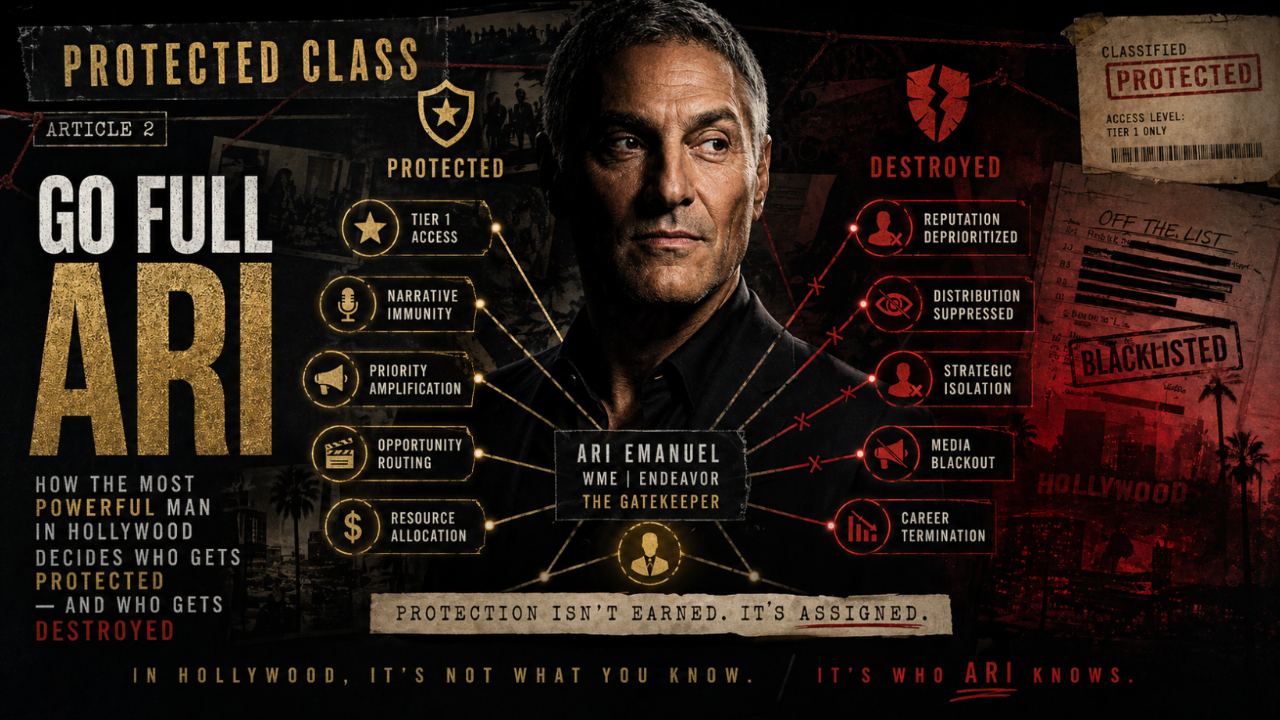
On August 18, 2024, Ryan Reynolds texted his agent with a clear demand: he wanted something done about Justin Baldoni — aggressively, effectively, and with the full force of the industry’s most powerful talent agency behind it.
His agent, Warren Zavala, replied with a simple sentence that needed no explanation inside Hollywood:
“He will willfully go full Ari on all of them.”
Reynolds responded: “That is at least some good news.”
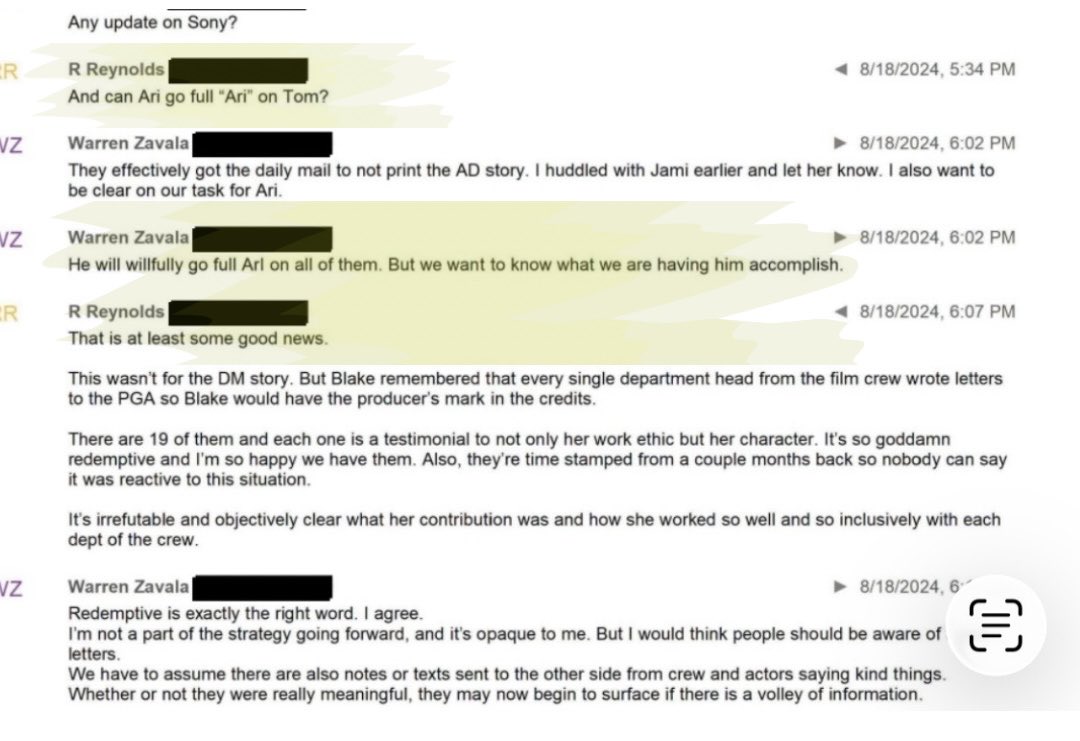
No further explanation required. No elaboration needed. Because inside Hollywood’s power structure, everyone who matters already knows exactly what those words activate.
Before we get to what happened next, you need to understand who Ari Emanuel actually is — because the mainstream press has spent years covering him as a colourful Hollywood character rather than what he actually represents: the single most concentrated point of non-governmental power in the American entertainment industry. A man whose influence extends not just across Hollywood but across Washington, across global finance, and across the family that helped shape American political life for two decades.
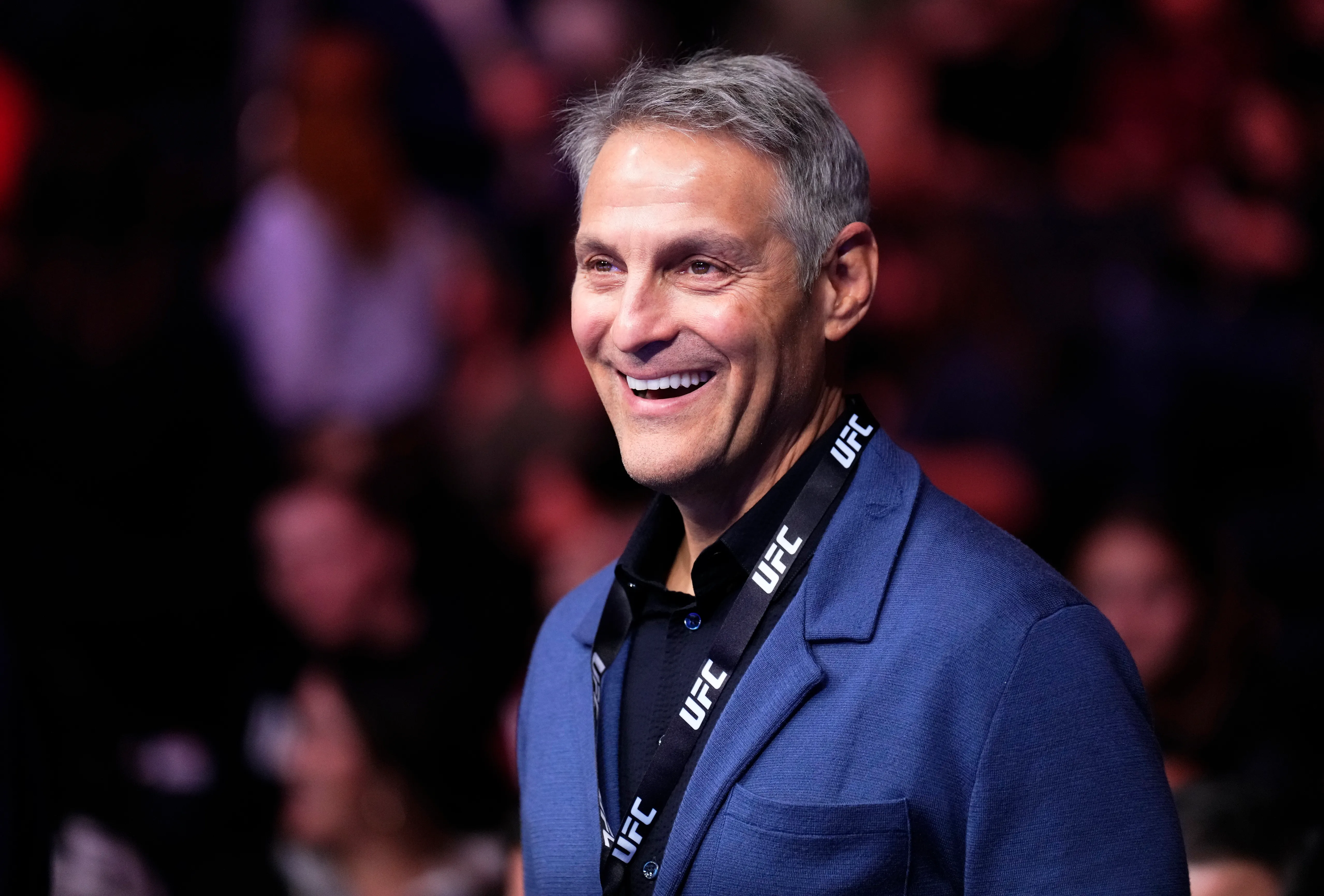
Ari Emanuel is the youngest of three brothers who collectively represent one of the most extraordinary concentrations of institutional power produced by a single American family. His brother Rahm Emanuel served as Barack Obama’s White House Chief of Staff, then as Mayor of Chicago for eight years, then as US Ambassador to Japan — and used Ari’s Hollywood connections to raise extraordinary campaign funds throughout his political career. His oldest brother Ezekiel Emanuel is one of the world’s leading bioethicists, a former Obama administration health policy advisor, and one of the principal architects of the Affordable Care Act.
One brother shaped American healthcare policy. One ran a major American city and served as the closest aide to a sitting president. And one runs Hollywood.
That is not background colour. That is infrastructure. The Emanuel family has direct, documented, multigenerational relationships at the highest levels of Democratic Party politics, American government, and now — through Ari — the entertainment and media industry. When Rahm needed campaign funding, Ari’s Hollywood connections were part of the fundraising architecture. When Ari needed regulatory goodwill, the family name carried weight that no other Hollywood executive could claim.
After being fired from ICM in 1995, Ari founded Endeavor from scratch. Through a series of mergers — with William Morris in 2009, with IMG in 2014, with UFC in 2016 — he built what is now WME Group, the most powerful talent representation infrastructure in the world, representing not just actors and directors but athletes, musicians, fashion designers, and public figures across virtually every domain of cultural production. Endeavor went public in 2021.
He is also documented as maintaining a long-standing personal relationship with Donald Trump — offering to produce a film for Trump’s 2016 Republican National Convention, and calling Jared Kushner directly after the murder of journalist Jamal Khashoggi to manage Endeavor’s $400 million deal with the Saudi Arabian government.
Democratic administrations. Republican presidents. Saudi Arabian sovereign wealth. The most powerful agency in Hollywood. One family. Thirty years of accumulated relationship capital across every axis of American power.
That is what “full Ari” activates. Not just an aggressive agent. A network.
His communication style — notoriously aggressive, famously intimidating — became so culturally recognized that it inspired the character of Ari Gold on HBO’s Entourage. But the Entourage version is the sanitized one. The documented version includes a $2.25 million settlement after employees sued him alleging a pornographic website was operated from Endeavor’s offices and that he made racist and anti-gay remarks. It includes calling a client “Bologna — whatever his name is” on a podcast while that client was in active litigation over contested facts. It includes giving only thirty days and rehab to an executive who sexually assaulted a client (Terry Crews).
When Warren said “go full Ari,” he wasn’t suggesting a phone call. He was activating a global network and high level connections. And it worked: WME dropped Baldoni immediately. Emanuel confirmed he fired Baldoni because he is “ride or die” for Reynolds and Lively.
The Rebel Wilson Question
Here is where the story gets more complicated — and more instructive about how the protection network actually operates.
In 2023, Rebel Wilson was directing her feature debut — The Deb, a musical comedy set in rural Australia. The film was backed by AI Film, a company connected to Sir Len Blavatnik — the Russian-born British-American billionaire who owns Warner Music Group, has significant stakes in Access Industries.
Wilson says the producers on the film — Amanda Ghost, Gregor Cameron, and Vince Holden — were mismanaging the project. She alleged embezzlement of $900,000 from the film’s budget. She alleged inappropriate behaviour by Ghost toward the film’s young lead actress, Charlotte MacInnes.
Interestingly, Wilson never filed any formal complaints about the alleged embezzlement or inappropriate behaviour. These claims only surfaced later as she escalated her dispute after being denied the 50/50 profit split and writing credits she says she was promised — credits the Australian Writers Guild had already denied her. Court-exposed emails show she weaponized the allegations as leverage in an attempt to pressure Len Blavatnik into giving her the deal she wanted.
Blavatnik did not give in to her demands and threats to block the release of the film if they were not met.
Her next move?
She emailed Ari Emanuel directly. At his personal email address. Twice. Both times after she was denied by Len.
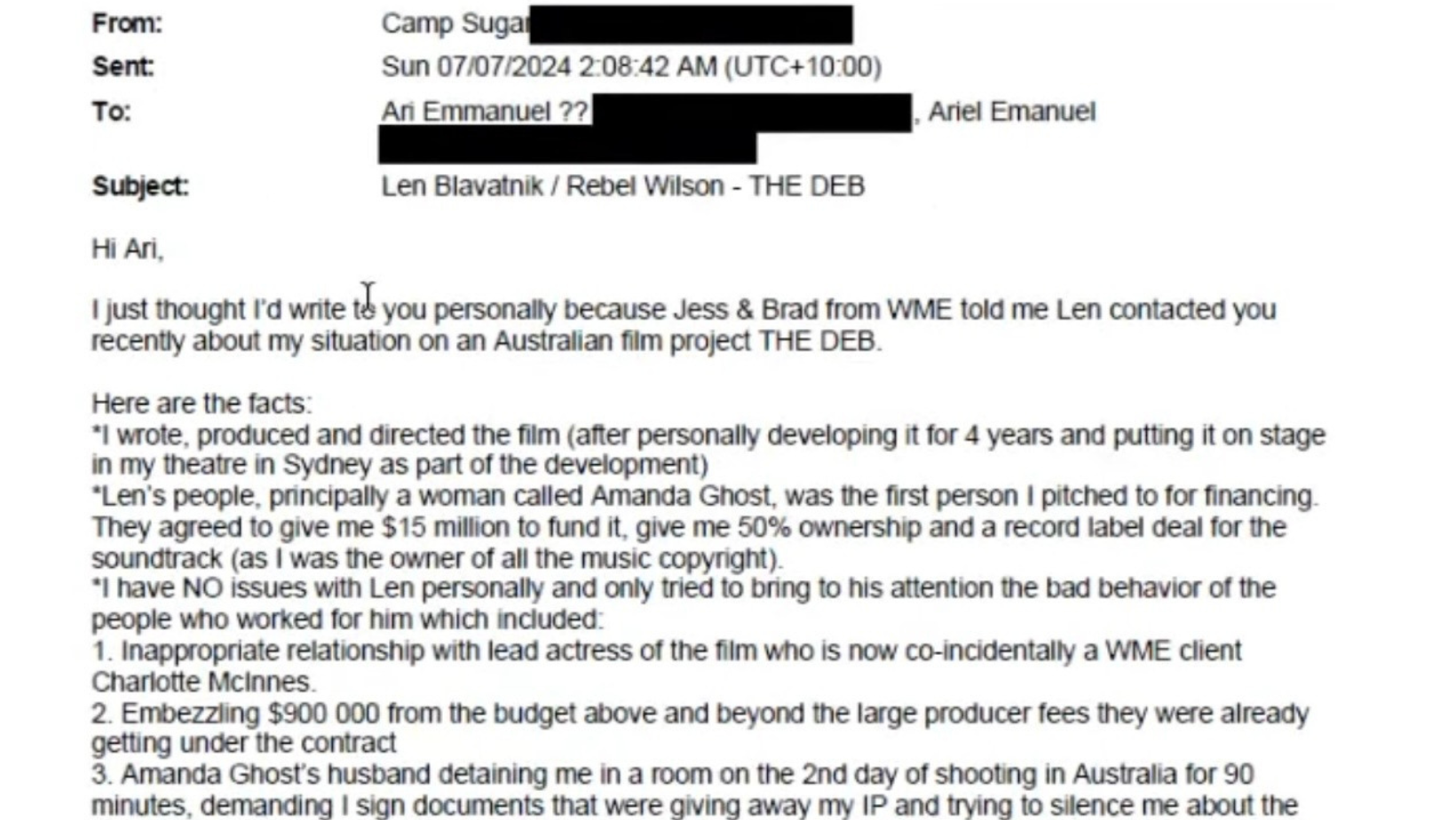
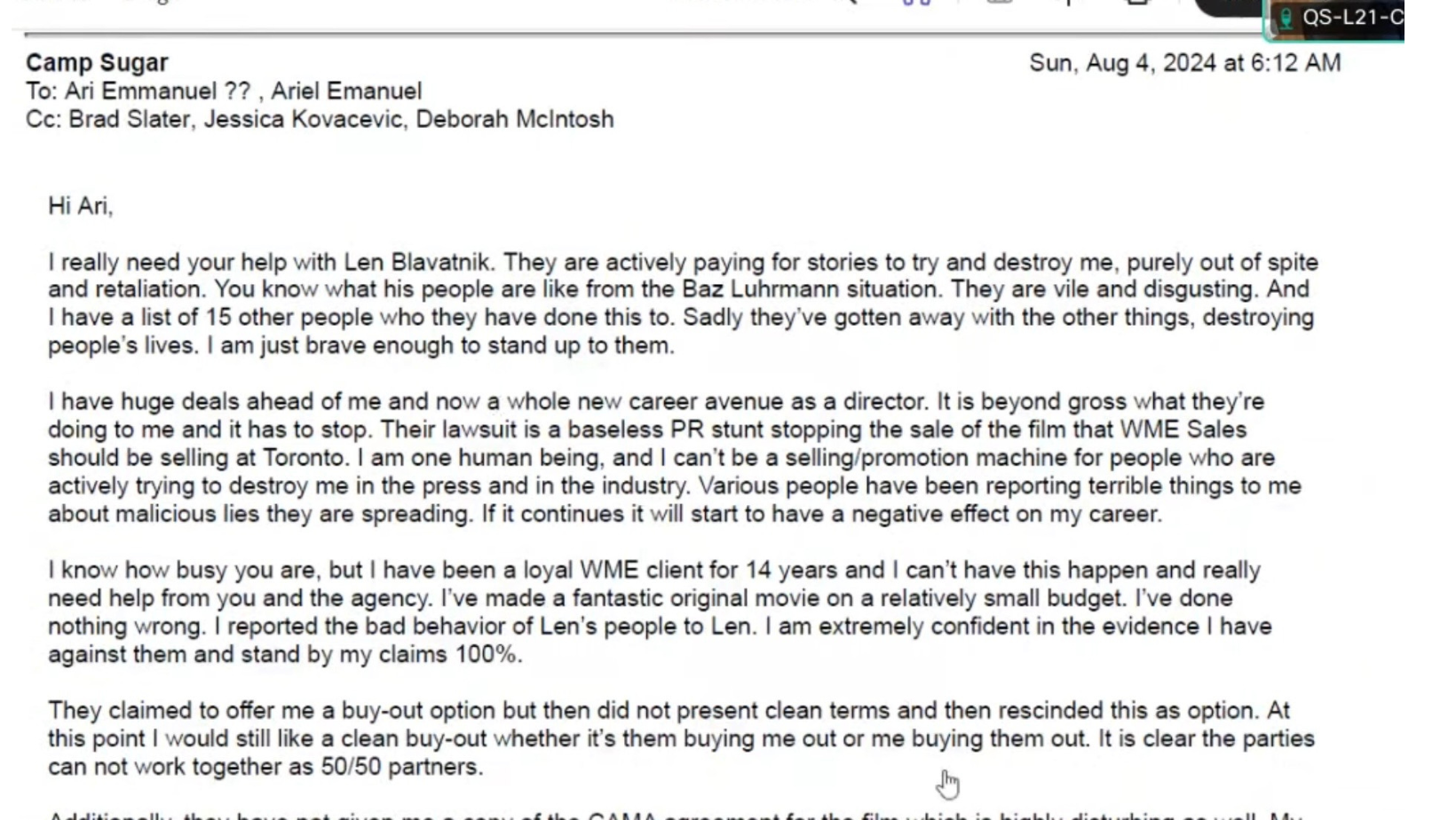
Think about what that tells you. When the billionaire backing her film wouldn’t help her, the person she went to — the emergency contact, the last resort, the person whose intervention she believed could cut through everything else — was Ari Emanuel of WME. Rebel was, at the time, a client of WME however it is also worth noting that WME Independent was representing the film for sales and distribution.
While defendants of Rebel claim that she was just “trying to protect herself from powerful people” her actual moves expose who she believed held the most power in Hollywood: Ari.
The fact that both Reynolds and Wilson — in completely separate disputes, on opposite sides of the world, involving completely different parties — independently identified the same man as the key to resolving their problems is not a coincidence.
It is a map.
It shows you where the actual power in Hollywood sits. Not in the studios. Not in the production companies. Not in the legal system. In the man who picks up the phone and makes the problem go away. Or doesn’t.
The Asymmetry — What Happened When You Didn’t Have Access to Full Ari
“Full Ari” isn’t a promise. It’s a service. And like every service in Hollywood, it comes with terms and conditions that are never written down — and only become visible the moment they’re withdrawn.
Ryan Reynolds had access to “full Ari.” He texted his agent (or in other cases Ari himself). The mechanism activated. Baldoni was dropped within 24 hours of the Times story breaking. Emanuel went on a podcast and called him “Bologna.”
Rebel Wilson had access to Emanuel’s personal email. She used it twice. What is publicly available is the fact that WME held a private screening of The Deb for their client Rebel Wilson. It was screened for a select group of industry figures at WME’s offices in Beverly Hills, including Netflix and Universal. Rebel wasn’t dropped. She wasn’t left out to dry. WME advocated for her and in doing so went against Amanda Ghost and Len Blavatnik.
Full Ari, though? Maybe not.
The mechanism is real. It is powerful. It is the most effective dispute resolution tool in Hollywood.
And access to it is entirely determined by where you sit on the power map.
For whatever reason Reynolds is at the top. The mechanism activated instantly and completely. Baldoni — less powerful, less connected, less valuable to the agency’s portfolio — was destroyed within 24 hours before a single fact had been established in court.
Wilson had a personal email address. She received a private screening for her movie.
The Rebel Wilson Trial — What’s Actually Happening in That Courtroom
I want to spend time on the current Sydney trial because it’s happening right now and it’s being covered almost entirely without the context that makes it legible.
Charlotte MacInnes is suing Wilson for defamation in the Federal Court of Australia. MacInnes claims Wilson’s Instagram posts portrayed her as a liar who retracted a sexual harassment complaint against producer Amanda Ghost in order to advance her music career through Ghost’s connections.
The court has heard that MacInnes secured a $110,000 record deal with Atlantic Records, owned by Warner Music Group, which is backed by Blavatnik’s Access Industries. The Deb producer Ghost is chair of Access-owned AI Film.
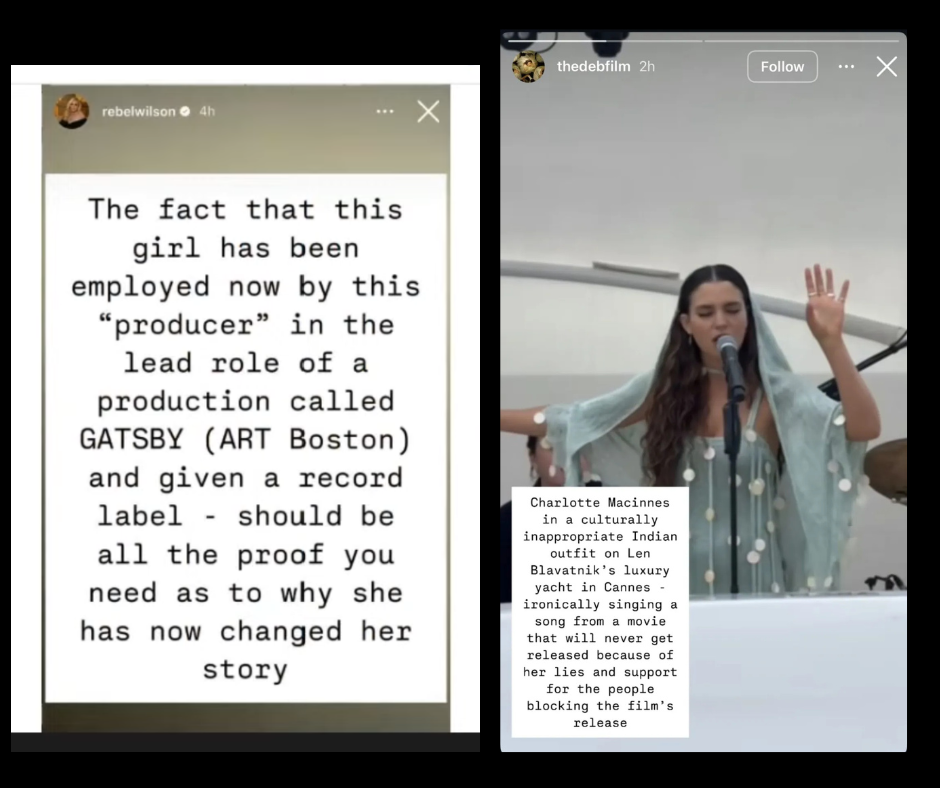
Court testimony also established that MacInnes performed a private one-on-one showcase for Blavatnik aboard his superyacht at Cannes — the chairman of Warner Music getting a personal audition from the lead actress of a film his company was backing, on his yacht, at the world’s most prestigious film festival.
That showcase landed MacInnes a $110,000 record deal with a Warner Music subsidiary.
Wilson’s argument is that MacInnes withdrew her harassment complaint about Ghost because Ghost’s connections — specifically her access to Blavatnik’s infrastructure, Warner Music, Atlantic Records — represented career value that was more useful than the protection of a complaint. That the retraction was a transaction.
MacInnes denies she ever made a harassment complaint. She denies the bath incident Wilson described made her uncomfortable. She says Wilson fabricated the complaint to use as leverage in a financial dispute.
What nobody is covering in the mainstream press is the infrastructure underneath this dispute. Because this is not a story about two women in a personal conflict. This is a story about what happens when Hollywood is attempting to sort out disputes.
Wilson went to Blavatnik. He didn’t act. She emailed Ari Emanuel. We do know that he held a private screening, however do not know the extent of his help beyond that.
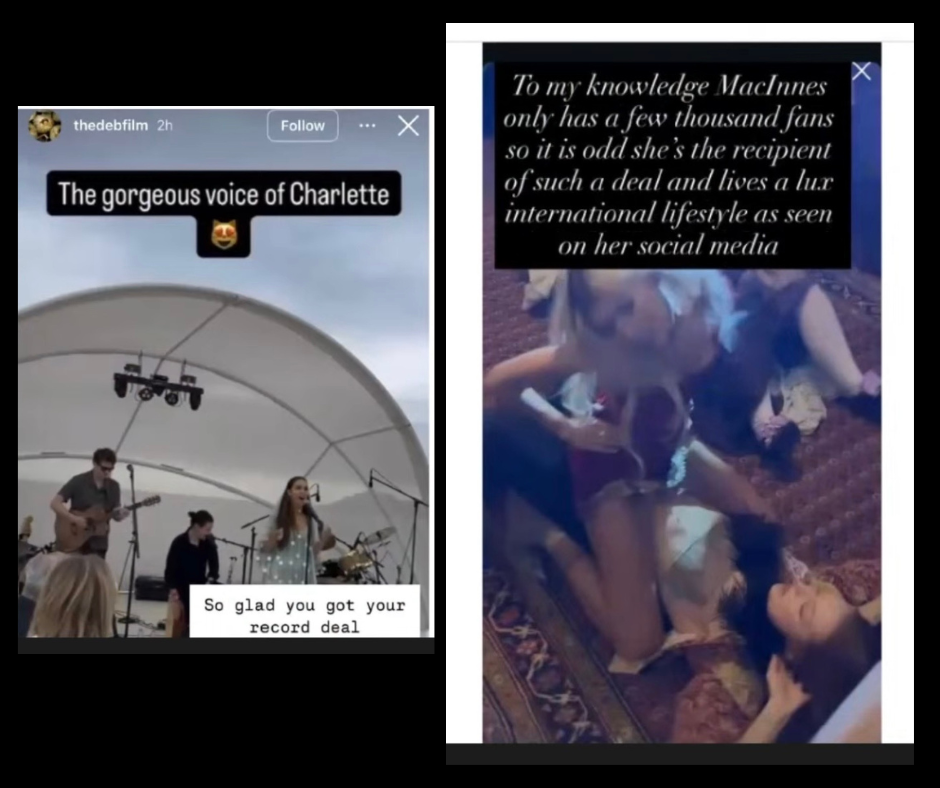
Seemingly feeling like Ari, her lawyers, and PR team weren’t fully protecting her she then went public on Instagram posting private images, surrounded by allegations of phone hacking, to smear Charlotte on The Deb’s official Instagram page.
(Note: For a more detailed breakdown please see my most recent video on YouTube HERE).
And now she is in a federal courtroom in Sydney, testifying about what she called an “absolute nightmare situation,” while the people backed by Blavatnik’s money have funded four lawsuits against her across two continents. The problem? She fails to mention how her own web of lies and manipulation landed her there.
Considering Rebel Wilson signed with UTA in 2025 I wonder if either Ari Emanuel got tired of the lies, and saw her as a liability, or she was unhappy with the level of “full Ari” she got in her dispute with Amanda and Len.
The reality is that the mechanism doesn’t just help the powerful. It punishes those who challenge them without having equivalent access to it.
What “Full Ari” Actually Describes
The phrase “full Ari” describes something specific. It describes the activation of a network — of relationships, of leverage, of implied consequences — that operates entirely outside any formal system of accountability.
It is not a legal mechanism. The lawyers are separate. It is not an HR mechanism. The studios have their own. It is not a regulatory mechanism. There is no regulatory body for this.
It is a power network. And it operates on a single principle: that the people inside it can make things happen — deals activated, deals killed, careers advanced, careers ended — through the application of relationships and implied leverage that never need to be stated explicitly to be understood completely.
This is why the Kimmel mechanism we described in the Controlled Demolition series works. This is why Baldoni was dropped within 24 hours without a trial, without a verdict, without a single established fact.
The mechanism doesn’t require explicit statements. It requires only that everyone in the room understands what the activation of the network means.
And everyone in Hollywood understands exactly what “full Ari” means.
The mechanism is not equally available. Its activation is not equally costly. And the outcomes it produces are not equally just.
That is not a system with accountability built into it. That is a system that uses the performance of accountability — the dropping of clients, the public statements, the podcast condemnations — to reinforce the power of the mechanism itself.
When Ari Emanuel confirms publicly that he fired someone because he is “ride or die” for two of his more powerful clients, he is not performing accountability. He is performing loyalty. And in Hollywood, those two things are indistinguishable — because loyalty to the powerful is the system’s version of justice.
____________________________________________________________________________________
The most dangerous thing about Hollywood’s protection network isn’t that it exists. It’s that everyone inside it believes they have access to it — right up until the moment they discover the terms.
— Ashley Briana Eve
The Narrative Autopsy · Protected Class Series
