The Truth About "Me Too" and Hollywood Power Players
Apr 21, 2026
There is a phrase Terry Crews said under oath before the United States Senate Judiciary Committee that has never gotten the attention it deserves. He had just finished telling senators how producer Avi Lerner called his manager and told him he could “avoid any problems” on Expendables 4 — the franchise he had appeared in for three consecutive films — if he dropped his sexual assault lawsuit against WME agent Adam Venit. He had just finished describing what it cost him to say no. The projects he turned down. The franchise he walked away from. The career consequences he absorbed for refusing to be silent.
Terry then stated:
“Abusers protect abusers — and this is one thing I had to decide, whether I was going to draw the line on. Am I going to be a part of this or am I gonna take a stand?”
Powerful words. Testified before the United States Senate. In 2018. Reported on at the time. And then, like so much else in this story, absorbed into the news cycle and largely forgotten — while the system that statement describes continued operating without interruption.
I want to put Terry’s statement, “abusers protect abusers”, back at the center of the conversation. Because they are not just a description of what happened to Terry Crews. They are the operating thesis of Hollywood’s entire power structure. They explain Ari Emanuel. They explain Adam Venit. They explain what happened to Justin Baldoni. They explain Harvey Weinstein. They explain everything this series is going to spend nine parts documenting.
Abusers protect abusers. The rest is just detail.
The “Bologna” Moment — What It Actually Was
On February 14, 2025, Ari Emanuel went on the Freakonomics podcast and said this about Justin Baldoni:
“It is a f—ed up, bad situation what Bologna… Baldoni… whatever his name is… is doing.”
I want to be clear about something before we go any further: Ari Emanuel knew Justin Baldoni’s name. He had represented him. He had colleagues who worked with him daily. He is, by his own account, so close to Blake Lively and Ryan Reynolds that he describes himself as their “ride or die.” A man at Ari Emanuel’s level does not lose track of which clients his agency represents — especially not clients connected to a case generating this much industry attention.
The “Bologna” moment was not a memory lapse. It was a power move. It was a public signal, delivered on a major podcast, to everyone in the industry who was listening: this person is so far beneath my concern that I cannot be bothered to remember his name. It is the Hollywood equivalent of a mob boss pretending not to recognize someone. The forgetting is the message. The forgetting is the punishment.
As we know the recording was leaked after Freakonomics claimed that due to a tech issue they couldn’t release the podcast (watch my video with the full audio recording HERE.)
However, the point is the humiliation of Justin Baldoni happened — performed by the most powerful agent in Hollywood, directed at a man who no longer had the protection of that agency’s infrastructure.
Ari Emanuel definitely knew his name. That is precisely why he didn’t use it.
What Emanuel Did When His Own Executive Was the Abuser
Now let’s talk about what happened when the shoe was on the other foot. When it was an Ari Emanuel executive who committed an assault. When it was an Ari Emanuel client who was the victim.
In February 2016, Terry Crews attended a party in Hollywood. Adam Venit — then the head of WME’s Motion Picture Group, one of the most powerful agents in the entertainment industry, personally representing Sylvester Stallone, Adam Sandler, Dustin Hoffman — grabbed Crews’ genitals in public and laughed about it.
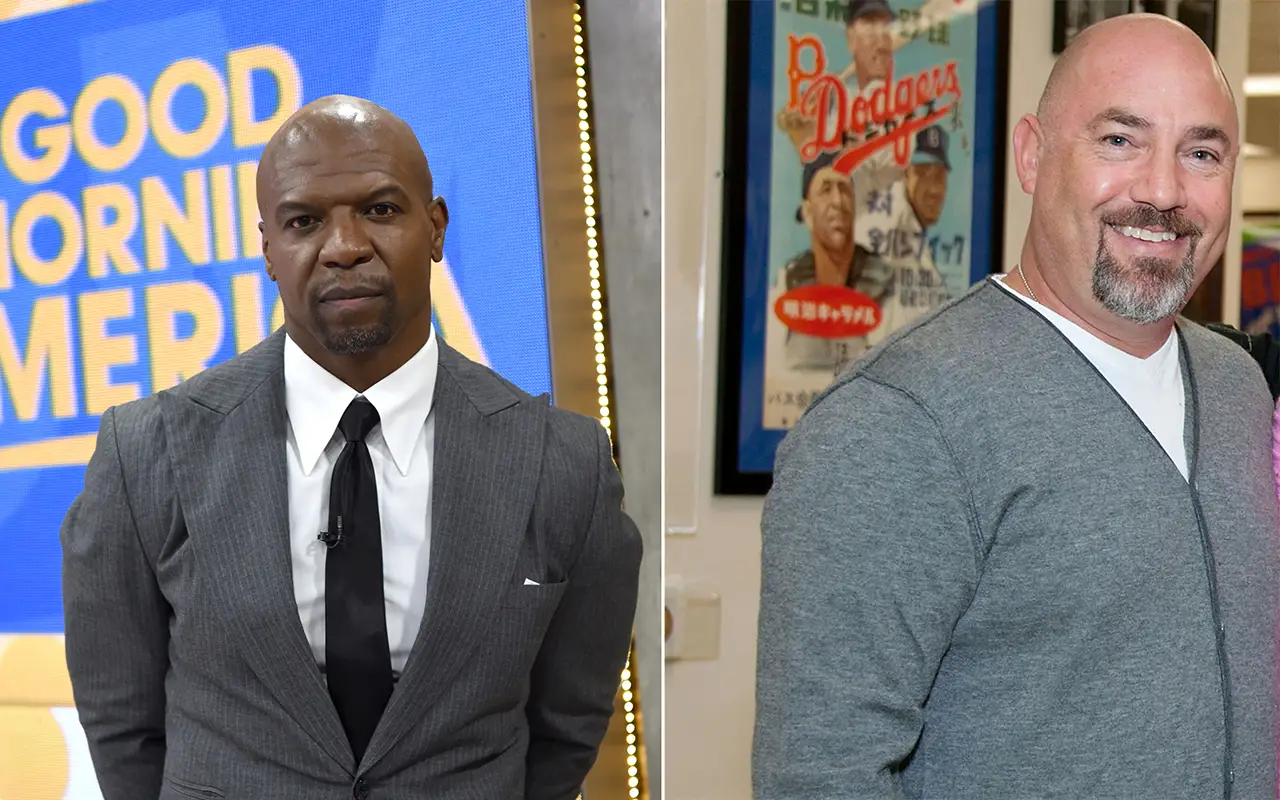
Crews said in his Senate testimony that the agent “was effectively telling me, while he held my genitals in his hand, that he held the power. That he was in control.”
Crews is 6’4”. A former NFL player. Built in a way that makes the physical disparity between him and Venit almost comedic on paper. And he made the calculation — instantly, correctly — that if he defended himself physically against one of the most powerful agents in Hollywood, his career would be over. He was right. And that calculation, made in a fraction of a second by a man with every physical advantage, is the most honest description of Hollywood’s power structure I have ever encountered.
He went to Ari Emanuel. He told him what Venit had done. He asked Emanuel to cut ties with the executive who had assaulted him.
According to the lawsuit Crews later filed, Emanuel acknowledged the assault but told Crews that Venit “couldn’t hurt his career” because he “lacked the power despite his prestige position.” Emanuel said WME would do an internal investigation, and that if they found any other sexual assault, Venit would be terminated. The consequence for the assault that had already been documented and admitted? Thirty days without pay, loss of title, and rehab.
Thirty days. Rehab. For the documented, admitted sexual assault of a client. By a WME executive. On Ari Emanuel’s watch.
Venit went back to work. A week later, Crews filed a lawsuit.
Then the Industry Moved In
What followed was a masterclass in how Hollywood’s protection network actually operates — and it is important to understand that it does not require a conspiracy. It does not require Ari Emanuel to pick up the phone and coordinate. It only requires what Terry Crews himself identified: abusers protect abusers. The system runs on mutual protection. When someone threatens it, the system responds.
Within weeks of Crews filing his lawsuit, his management received a call from Avi Lerner — producer of The Expendables franchise — saying Crews could “avoid any problems” on the sequel if he dropped his case against WME.
Note what just happened. A producer — who was himself, it emerged, under investigation for sexual harassment at his own company — called the manager of a sexual assault victim and offered to make his “problems” disappear if he stopped pursuing justice. And the currency being offered was career access. A role in a franchise. The thing that, in Hollywood, is the difference between working and not working.
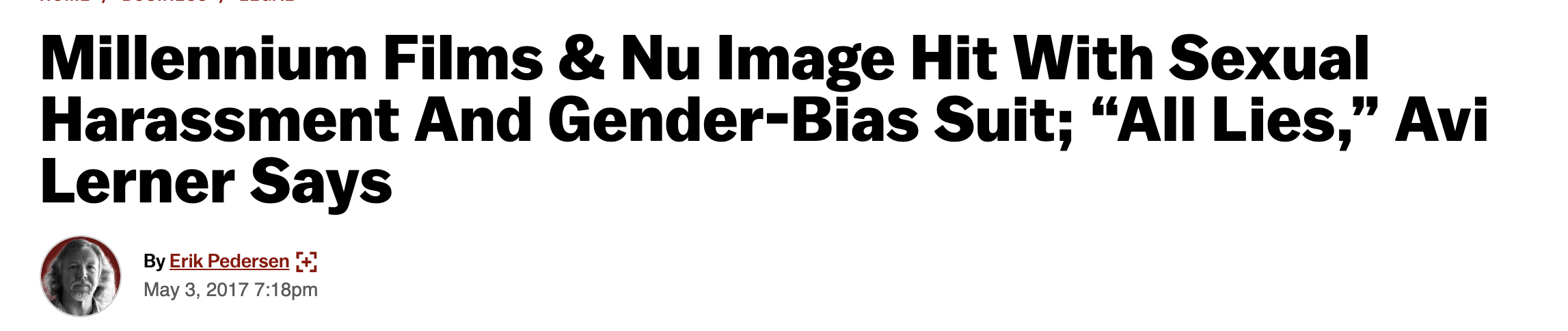
Crews testified before the Senate about this directly. He said that since he had come forward, thousands of men had reached out to him with the same story — but they hadn’t felt safe enough to come forward themselves. “Because what happens is you get blacklisted, your career is in danger — after that, no one wants to work with you.”
Crews said no to Lerner. He declined to drop the case. He testified before the Senate. And he did not appear in The Expendables 4. When asked if he was set to appear in the film, Crews said: “No. Simply because this same producer is under his own investigation. Abusers protect abusers — and this is one thing I had to decide, whether I was going to draw the line on. Am I going to be a part of this or am I gonna take a stand. And there are projects I had to turn down.”
There are projects he had to turn down. Said under oath. Before the United States Senate. In 2018.
Terry Crews has continued working. He is not invisible. But look at the trajectory of a career that should, by every measure of talent and profile, have gone significantly further — and ask yourself what it cost him to say the things he said, publicly, on the record, against the most powerful talent agency in the world, during the height of MeToo, and still not have it result in any meaningful accountability for the people he named.
Terry Crews himself has publicly suggested he experienced professional retaliation and lost opportunities after speaking out against Adam Venit.
Adam Venit quietly left WME in early 2018. No criminal charges. No public statement. No accountability hearing. No industry reckoning. He left. That was it.
Ari Emanuel is currently worth over a billion dollars.
Now Watch What Happened to Baldoni
WME dropped Justin Baldoni within 24 hours of Blake Lively filing her complaint. Ari Emanuel went on a podcast and called him “Bologna — whatever his name is.” He said “until I fired him” with the satisfaction of a man performing his own righteousness for an audience he knew was watching.
Then a federal judge dismissed 10 of Lively’s 13 claims against Baldoni, including the sexual harassment allegations themselves.
The most powerful man in Hollywood publicly humiliated his own former client. Called him by a fake name. Celebrated his firing. Positioned himself as the moral conscience of an industry he has spent decades helping to run exactly the way it has always been run — where the people with power are protected and the people without it are sacrificed.
And, in that moment of the sexual harassment charges being tossed out there was no apology to Justin Baldoni. No awards were returned to him. Ari Emanuel did not publicly acknowledge the situation. Nor will he. It was never about whether Justin Baldoni actually was in the wrong or not. It was power protecting power. It was about power standing BEHIND power.
Justin didn’t have it. Ryan Reynolds, and by extension Blake Lively, did.
And I want to be transparent here about something: I have a personal stake in this story. Blake Lively and Ryan Reynolds’ PR machine placed hit pieces about me in Glamour magazine. They planted an article titled “Inside the Blake Lively Hate Campaign Fueled by ‘Mommy Sleuths’” that named me directly. In a typical PR move they attempted to discredit my coverage of this case by reducing my work about Nick Shapiro, Blake’s new PR rep and former head of Air BNB Black Box, as coming from a “citizen journalist” rather than PR professional or media analyst. I also received a subpoena from a federal court in the United States after they accused me of being paid by Justin Baldoni and Wayfarer. I am not neutral on Justin Baldoni. I am on his side until evidence convinces me otherwise.
But that is not why I am writing this piece. I am writing this piece because the pattern matters regardless of my personal experience. The pattern is documented. The pattern has names and dates and Senate testimony attached to it. And the pattern says one thing, clearly, across every data point:
The variable that determines who gets protected and who gets destroyed in Hollywood is never the behaviour. It is always, only, the power map.
Venit had power. He stayed.
Crews challenged power. He paid for it.
Baldoni lacked the right power. He was sacrificed.
Reynolds has the right power. He is celebrated.
And Ari Emanuel — the man who gave a predator thirty days and rehab, who presided over a system that threatened a Senate witness with career destruction if he pursued justice, who called his former client “Bologna” on a podcast — is described in the press as a moral authority and a loyal friend.
Abusers protect abusers. Terry Crews said it first. He said it under oath. He said it because he lived it.
The rest of us just have to decide whether we’re willing to see it.
The Pattern Is the Point
I want to close Part 1 by naming the thing this series is actually about — because it is not about Ari Emanuel specifically. It is not about Justin Baldoni or Blake Lively or Ryan Reynolds or Terry Crews or Adam Venit as individuals.
It is about a system that has a specific, consistent, and documentable method for deciding who is protected and who is not. That method is not based on truth. It is not based on evidence. It is not based on the severity of the behaviour or the credibility of the victim or any moral framework whatsoever.
It is based on power. On who you represent. On who your friends are. On whether the people above you in the structure have more to gain from protecting you or from sacrificing you.
That system produces Ari Emanuel calling someone “Bologna” on a podcast while collecting a billion-dollar payout for presiding over an agency whose own executive assaulted a client.
That system produces Avi Lerner calling a sexual assault survivor’s manager to offer him career access in exchange for silence.
That system produces thousands of men who came to Terry Crews privately and said “me too” — and never said it publicly, because they understood what it cost to say it out loud.
That system is Hollywood. It has always been Hollywood. And it has survived every reckoning, every MeToo moment, every congressional testimony, every podcast confessional — because the people running it have mastered the single most important skill in maintaining power:
They perform accountability for the people who can’t hurt them.
And they protect each other from everything else.
Part 2 drops this week: Harvey Weinstein, MeToo, and why the man who became the face of Hollywood accountability was chosen — not discovered.
Abusers protect abusers. Terry Crews said it under oath before the United States Senate in 2018. The industry heard it. And then it gave Adam Venit a quiet exit and Ari Emanuel a billion dollars.
Cause of death: the wrong power map.
— Ashley Briana Eve
The Narrative Autopsy · Protected Class Part 1 of 9
