
The Grief & Relief of an Adult ADHD Diagnosis in High Performers
Jun 25, 2026
You didn’t get this far because you had it easy. You got this far because you are extraordinarily good at compensating. At pushing through. At finding a way. At making it look manageable from the outside while quietly running on fumes on the inside.
And then you got the diagnosis.
And something shifted — in a way that was more complicated than anyone warned you it would be.
The Two Things That Happen at Once
Most people describe an adult ADHD diagnosis as arriving with two feelings simultaneously — feelings that seem like they should cancel each other out, but don’t. I know, not only from my past of working within the mental health field, but also from having walked this journey myself with a mid 30’s ADHD diagnosis. My hope is my ADHD + HD content helps you feel seen for where you have been, supported for where you are now, and guided for the upcoming journey of discovering who you really are.
There’s the relief. Finally, an explanation. Finally, a framework. Finally, language for the thing you’ve been living without being able to name. Research from Psychology Today describes this as diagnostic relief — the moment when the struggles that felt like personal failings are suddenly recontextualized as a neurological reality rather than a character flaw.
Dr. Amy Moore, a cognitive psychologist specializing in ADHD, describes the emotional intensity of this moment specifically: the ADHD brain experiences emotions in a magnified way, she says. Which means the relief can feel like exhilaration. An almost physical unburdening.
And then the grief arrives.
The grief associated with a late ADHD diagnosis can be understood as a form of ambiguous loss — where the object of mourning is not a tangible person or event, but an unlived life trajectory.
Dr. Cristina Louk, writing in 2026, puts language to what so many people experience but struggle to articulate: this isn’t grief for something you lost. It’s grief for something you never got to have. The version of your life that might have been possible with the right framework, the right support, the right understanding of how your brain actually works.
Research published in the journal Brain Sciences found that the adult ADHD diagnosis process mirrors the cycle of grief theory — often moving through denial, then turmoil (anger, sadness about the past, anxiety about identity), and eventually, through a process of meaning-making, toward acceptance. Both responses — relief and grief — are documented, valid, and often present at exactly the same time.
Two honest reactions to the same event. Neither cancels the other out.
The Grief Is Specific
For high performers — for the people who achieved, who delivered, who held it all together — the grief tends to be particular.
It’s the grief of recognition: that the success was real, but so was the cost. That you ran the marathon. You finished it. And the whole time, you were running in the wrong shoes.
Anyone would have blisters. Anyone would be bruised. The shoes were wrong, not the runner.
The grief often moves through several channels at once. There’s grief for the younger version of you — the one who worked so hard without the right framework. There’s grief for the years spent shoring up weaknesses instead of building on strengths. There’s grief for the energy that went into performing neurotypicality when that energy could have gone somewhere else entirely.
And there’s the grief of the internalized self-blame that finally, with a diagnosis, you can see was never yours to carry.
Research consistently shows that adults diagnosed later in life have elevated rates of anxiety, depression, and low self-esteem — outcomes that aren’t solely attributable to the neurobiology of ADHD, but to the cumulative effects of misunderstanding and lack of support. In other words: the damage wasn’t just the ADHD. It was the decades of being told, or telling yourself, that the struggle was a you problem.
It wasn’t. It was always a fit problem.
The Question That Follows
At some point after the relief and the grief, a quieter question begins to form.
Now what?
Because understanding that you have ADHD doesn’t automatically tell you who you actually are underneath the decades of compensation. It doesn’t tell you how you’re specifically designed to make decisions, recover energy, or build a life that’s sustainable rather than just survivable.
It tells you what’s harder. It doesn’t yet tell you what’s yours.
This is where most post-diagnosis frameworks stop. They address the deficit. They provide strategies. They help you manage the ADHD.
But managing a condition and understanding yourself are two different things. And for the high performer who has been managing brilliantly their entire life — more management, control, and productivity hacks is rarely the answer they’re looking for.
You spent your whole life shoring up your weaknesses. What would it look like to finally build from your strengths?
What Positive Psychology Tells Us

This is where the research becomes genuinely exciting.
A landmark 2025 study published in Psychological Medicine — the first of its kind — examined self-reported strengths, strengths knowledge, and strengths use in 200 adults with ADHD compared to 200 without. What they found challenges the deficit-first narrative that has dominated ADHD treatment for decades.
Adults with ADHD consistently self-reported strengths including creativity, cognitive dynamism, hyperfocus, flexibility, empathy, resilience, courage, and energy. These weren’t minor footnotes to the deficit profile. They were significant, consistent, and meaningfully different from the non-ADHD group.
But here’s the part that matters most: the study also found that adults with ADHD reported lower strengths knowledge and lower strengths use than their neurotypical counterparts. They had the strengths. They just didn’t know it — or didn’t know how to access them.
CHADD, drawing on the positive psychology framework, concludes that a strengths-based approach to ADHD has the potential to increase self-esteem and optimism for the future — not by denying the challenges, but by shifting the lens from deficit to design.
The question isn’t just what’s harder for you. It’s what you’re specifically built for.
Why Human Design Belongs in a Positive Psychology Framework
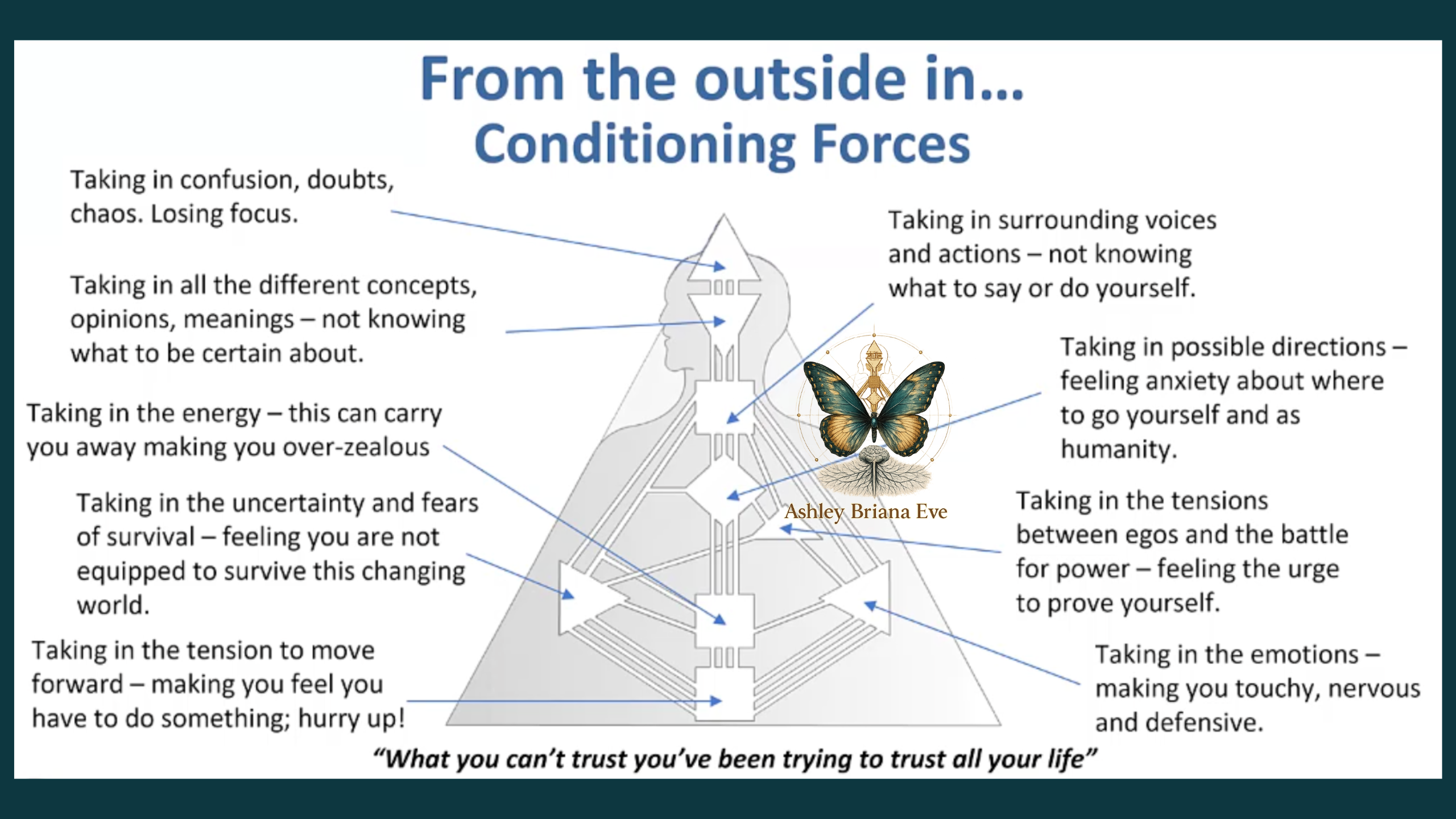
Human Design is not a spiritual bypass. Used correctly, it is one of the most sophisticated strengths-based frameworks available for self-understanding — and it maps directly onto what positive psychology research tells us adults with ADHD most need: accurate, personalized knowledge of how they are specifically designed to function. Think of Human Design as Myers Briggs, or the Gallup Strengths Finder, using your birthdate rather than a series of questions.
Positive psychology’s foundational insight — articulated by Martin Seligman and Christopher Peterson in their development of the VIA Character Strengths framework — is that wellbeing is not the absence of pathology. It is the presence of genuine flourishing. And genuine flourishing requires knowing and using your actual strengths — not performing borrowed ones.
Human Design does something that most strengths frameworks can’t: it gives you a map of how your energy works, not just what you’re good at. For an ADHDer, this distinction is everything.
Because the question after a late ADHD diagnosis isn’t just ‘what are my strengths?’ It’s ‘how do I actually work? How do I make decisions that don’t continue the impulsivity or burnout cycles? How do I recover? When is my energy available and when isn’t it? What environments allow me to thrive versus survive?’
Human Design answers those questions specifically. Not generically. For you.
What Human Design Actually Does for ADHDers
Let me be precise about something, because this matters: Human Design doesn’t cause ADHD and there is nothing that says ‘because you have this in Human Design you are more prone to ADHD’. It doesn’t explain every ADHD symptom. And anyone who tells you that your undefined centres are the reason for your ADHD is oversimplifying in a way that’s ultimately dangerous.
What Human Design does is give you a map of your unique energetic and cognitive design — which, when layered with ADHD, creates a profile that is genuinely one of a kind. Your ADHD will express differently depending on your Human Design type, your defined and undefined centres, your authority, and your profile. An ADHD Projector experiences their ADHD differently to an ADHD Generator. An ADHD Manifestor’s relationship to their nervous system is different to an ADHD Reflector’s.
Understanding your design doesn’t replace understanding your ADHD. But it gives you something ADHD frameworks alone can’t offer: a map for who you are when the ADHD is accounted for. A starting point for the question that follows the diagnosis.
ADHD tells you what’s harder. Human Design tells you what’s yours.
This is why I created ADHD + Human Design. Not to explain ADHD through a spiritual lens. But to give the post-diagnosis high performer the next map. The one that answers: now that I know what’s been working against me — what was I actually built for?
Getting Curious Instead of Critical
The most important shift that Human Design makes possible — and the one that positive psychology research consistently identifies as predictive of better outcomes — is the shift from self-criticism to self-investigation.
For most of your life, the question was: what’s wrong with me?
Human Design offers a different question entirely: that’s interesting — I wonder why I work this way?
Not judgment. Curiosity. And that single shift — from fixing yourself to understanding yourself — is what makes lasting change possible. You cannot sustainably change what you’re judging. You can only change what you’re genuinely curious about.
The post-diagnosis journey isn’t about managing your ADHD better. It isn’t about finding a hack to be more productive. It’s about finally getting to know yourself. Accurately. Completely. Without the lifelong overlay of ‘something is wrong with me.’
You spent years shoring up your weaknesses. Trying to be something you weren’t. Running the marathon in the wrong shoes and calling the blisters a character flaw.
You have permission now to stop.
Not to give up. Not to use your neurodivergence as an excuse. But to finally, genuinely, start from who you actually are.
You are not a problem to solve. You are a pattern to understand. And you are finally allowed to be curious about the pattern instead of ashamed of it.
A Final Note
If you received a late ADHD diagnosis and felt both relief and grief at once — that’s not confusion. That’s accuracy. Both are the correct response to what happened. You’re allowed to hold them simultaneously.
And when you’re ready to move from the grief into the curiosity — when you’re ready to stop asking what was wrong and start asking what was always true — that’s where this work begins.
Get your free body graph at ashleybrianaeve.com and start the journey today.
Or come find me on the ADHD + Human Design podcast, where we go deep on exactly this. You can find the podcast on YouTube or your favourite podcasting app.
You are not broken and you do not have to continue the patterns that have caused you to fall apart behind closed doors. I’m offering a new path forward.
ashley
Founder: The Radical Happiness Movement & ADHD + HD
