
The MAGA Civil War Nobody Saw Coming
Apr 14, 2026
There is a specific kind of silence that falls right before a structure gives way. Engineers know it. Anyone who has watched something load-bearing start to fail knows it. The silence isn’t absence — it’s the sound of everything that was holding something together deciding, all at once, that it no longer will.
That silence broke this week.
What happened in the last seven days inside the MAGA media ecosystem is not a political story, though it’s being covered as one. It’s not a personality conflict, though it’s full of them. It is a structural event — the visible, public, and I would argue irreversible fracturing of the coalition that put Donald Trump back in the White House in 2024.
And if you know how to read it, it tells you something important not just about Trump, but about how power and media and narrative control actually work in 2026.
That’s what this series is about. Welcome to Controlled Demolition. This is part 1 of 3.
The Fracture
It started with Iran. Trump launched a military operation — Operation Epic Fury — against Iran. He had campaigned on “no new wars.” The war began anyway, and from the start it divided the decentralized media coalition that had been one of his most powerful political assets— many close with the recently assassinated Charlie Kirk who was strongly against the war.
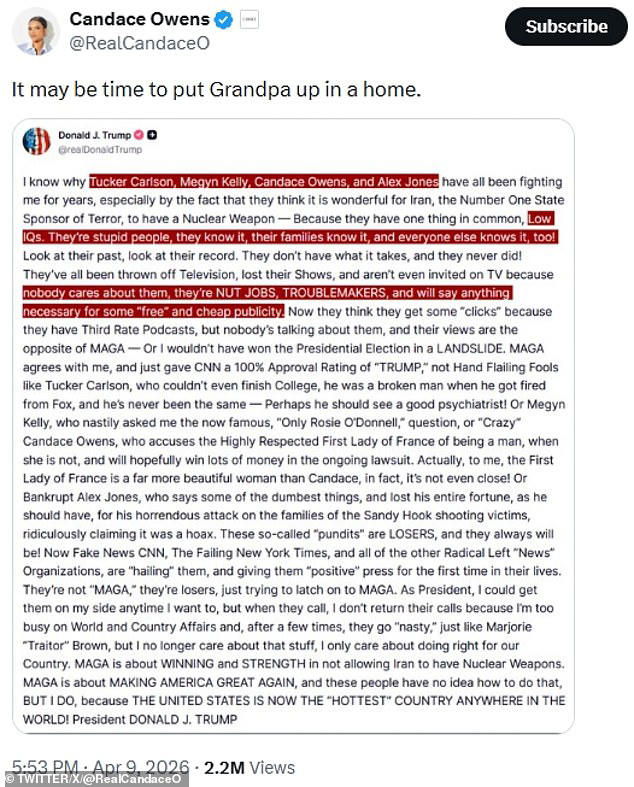
Over the past several weeks, the fracture that had been slowly building became public and then became irreversible. Tucker Carlson went on air and told US military officials to resist Trump’s orders if doing so would prevent nuclear escalation. Megyn Kelly said on her podcast: “You don’t just threaten to wipe out an entire civilization.” Candace Owens called the administration “satanic,” said “Zionists occupy the White House,” and called on Congress to invoke the 25th Amendment, calling Trump a “genocidal lunatic.” Alex Jones, who has been one of Trump’s loudest champions for years, asked his audience how to remove Trump via the 25th Amendment and said Trump’s “brain isn’t doing too hot.” Marjorie Taylor Greene, who resigned from Congress after a falling out with the president, posted: “We NEVER changed. Trump did.”
Then this past Thursday, Trump posted a 482-word screed on Truth Social calling all four podcasters “NUT JOBS,” “TROUBLEMAKERS,” and “stupid people” with “Low IQs” and “Third Rate Podcasts.” He attacked Tucker Carlson’s college attendance. He attacked Candace Owens’ appearance, saying the First Lady of France is “far more beautiful” than her. He dug up a question Megyn Kelly asked him at a debate in 2015. Jones he called “bankrupt.” And he concluded: “They’re not MAGA. They’re losers.”
Candace Owens responded with: It may be time to put Grandpa up in a home.
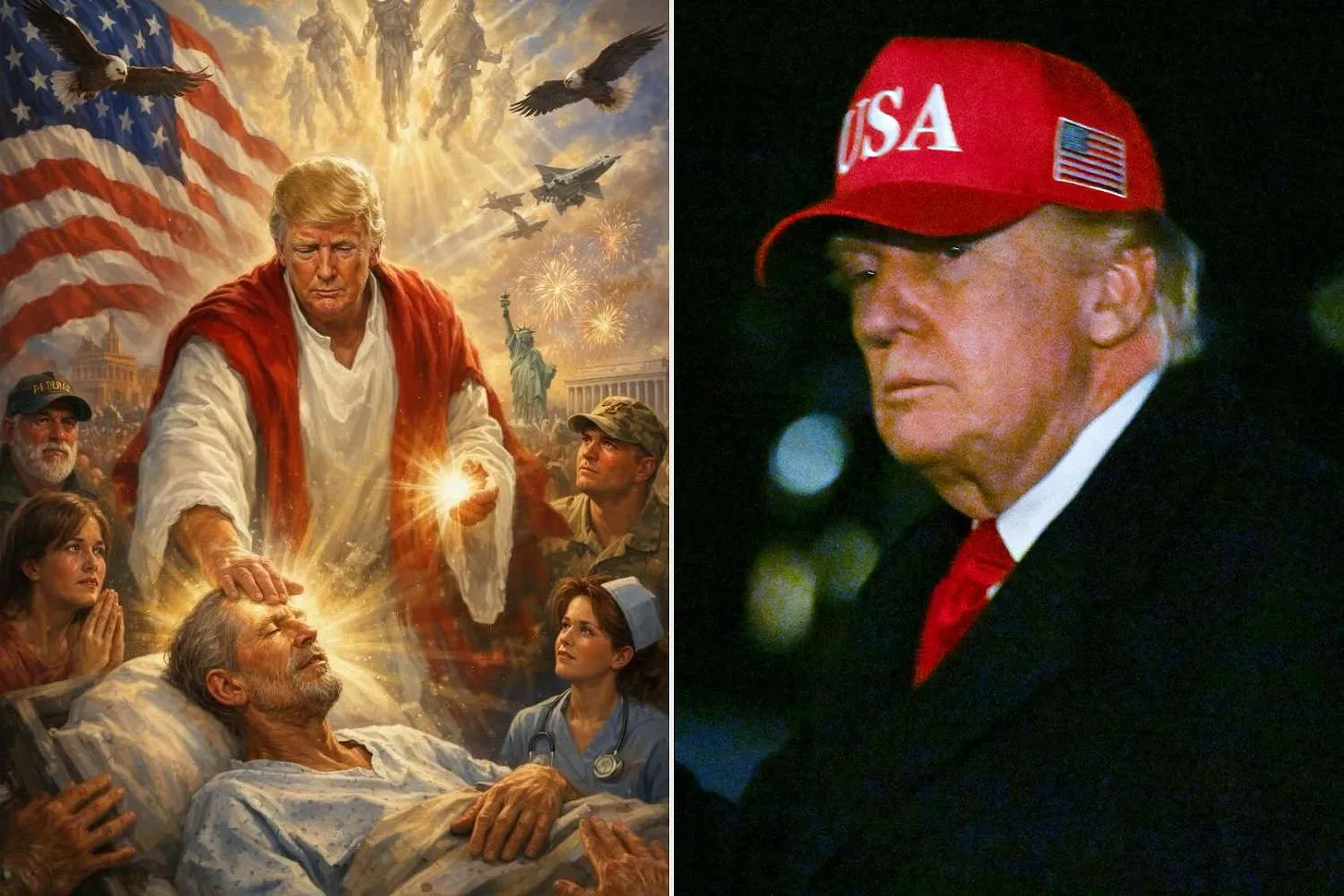
And then, on Sunday night — Orthodox Easter — Trump posted an AI-generated image of himself dressed as Jesus Christ, less than an hour after calling Pope Leo XIV “WEAK on Crime” and “terrible for Foreign Policy.” The image was deleted Monday morning. Trump told reporters he thought it depicted him as a doctor.
He will not apologize to the Pope.
That is the week. Now let’s talk about what it means.
The Crisis Comms Breakdown of a 482-Word Screed
The first thing any PR analyst should notice about Trump’s Truth Social post is not what it says. It’s what it doesn’t do.
It does not make a case for the Iran war. It does not counter any of the specific arguments Carlson, Kelly, Owens, or Jones made. It does not address the substance of the criticism — that the war contradicts his central campaign promise, that the rhetoric about wiping out “a whole civilization” was reckless, or even the real reasons for the war (because let’s be honest it wasn’t about regime change to Trump).
It does none of those things. Instead it attacks college degrees, podcast ratings, physical appearance, and an eleven-year-old debate question.
In crisis communications, this has a name: the ad hominem pivot. This strategy combines the ad hominem fallacy (attacking the person instead of the argument) with a media pivot (steering the conversation) to discredit the source of criticism and avoid engagement with the actual issue.
Put simply: It is what you do when you cannot win the argument on its merits, so you attack the character of the people making it. And it is one of the clearest signals in the communications playbook that the person making it has already lost the argument internally — and knows it.
Here is the rule: when you are winning the narrative, you do not respond to critics. You ignore them. The fact that the President of the United States wrote nearly 500 words about four podcast hosts — named them individually, got personal, got petty — tells you that those four podcast hosts are landing. Their criticism is reaching an audience he cannot afford to lose. And he has no counter-argument that will work on that audience.
If nobody’s listening to Tucker Carlson, why does Trump need 482 words to say so?
The Fracture Map — Who’s Where and Why
The MAGA media ecosystem has now split along a single fault line: Israel and Iran.
On one side — the America First, anti-war camp. Tucker Carlson. Megyn Kelly. Candace Owens. Alex Jones. Marjorie Taylor Greene. Charlie Kirk would have been here if he was still alive.
And now, in a development that cuts deeper than any of those names, broader culture figures: Joe Rogan and Tim Dillon have grown increasingly exasperated with the administration. Comedian Theo Von drew widespread attention this week for publicly likening Israeli leaders to terrorists and a “satanic regime”. These are not political operatives. These are cultural voices with massive independent audiences — and they’re moving.
If you ask me, just another conspiracy theorist, THIS is the exact movement Charlie Kirk was prevented from generating.
On the other side — the pro-war, pro-Israel camp. Ben Shapiro, who called the Iran campaign “the single bravest foreign policy move of my lifetime.” Laura Loomer, who criticized the ceasefire but carefully blamed Trump’s advisors rather than Trump himself — then went on to talk about “knifing” Tucker from the front after admitting she sent his videos to Trump.
And then there is a third category that nobody is talking about enough: the elected Republicans who are criticizing the war without blaming Trump. Calling it out, but contorting themselves into extraordinary rhetorical positions to avoid pointing the finger at the person who ordered it. One congressman left a classified Pentagon briefing furious about the war’s lack of clear objectives — and then sent a follow-up text message to a reporter to make clear his criticism had “NOTHING to do with Operation Epic Fury” and that he “fully supports what the administration is doing in Iran.”
Read that again. He’s angry about the war and also fully supports the war. And it is arguably the most revealing data point in this entire story — because it shows you that even the people who know this is wrong cannot say so cleanly. The narrative control, even in its fractured state, still has enough force to make elected officials perform support for things they privately oppose.
That is the machine at work. Even breaking down.
The Pope Moment — Why This One Cuts Differently
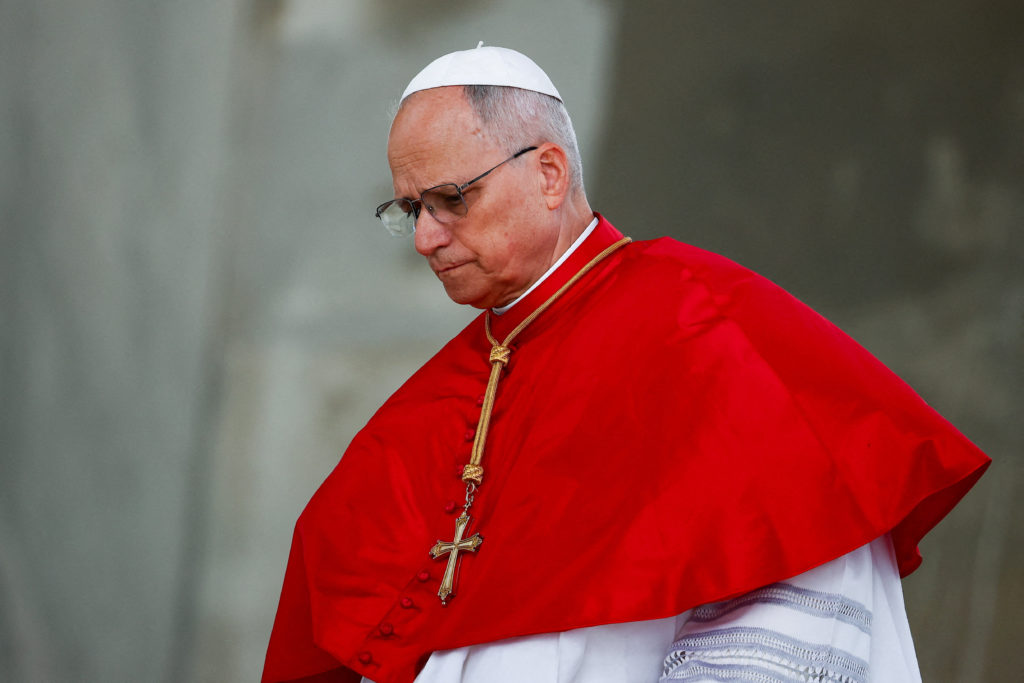
I want to spend time on the Pope specifically, because I think it’s the story inside the story — the one that tells you the most about where this is actually heading.
Pope Leo XIV is the first American pope. He was elected after the death of Pope Francis. And he has been consistent and clear — not political, theologically grounded — in his opposition to the Iran war and to the administration’s immigration policies.
This weekend he said from the Vatican:
“Enough of the idolatry of self and money. Enough of the display of power. Enough of war.”
Trump’s response was to call him “WEAK on Crime” and “terrible for Foreign Policy.” He added: “If I wasn’t in the White House, Leo wouldn’t be in the Vatican.” And then, less than an hour later, he posted an AI image of himself as Jesus Christ.
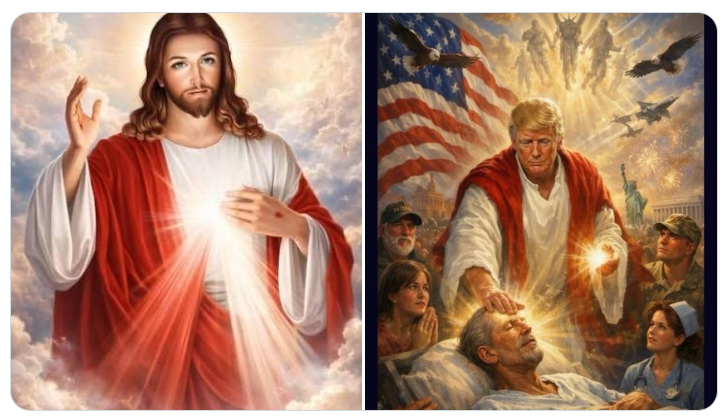
The image was deleted the next morning. Trump claimed it was a doctor.
Here is what that sequence tells you from a crisis communications standpoint.
Someone in that White House understood that the Jesus image crossed a line that the Pope attack did not. The walk-back — however weak, however absurd the “I thought it was a doctor” explanation — signals that there are still people around Trump who are doing damage calculations. The Pope attack stays. The Jesus image comes down. That’s a triage decision, that also satisfies Trump for a “win”, not a principled one.
But look at what the triage reveals about the calculation being made: they believe the pro-war, pro-Israel base will accept attacking the Pope. They don’t believe that same base will accept posting yourself as Jesus. Which means they are managing two different sensitivities simultaneously — and they are doing it badly, in public, with the whole world watching.
The Pope’s response was, it has to be said, perfectly calibrated. Speaking to the Associated Press aboard the papal plane to Africa, Leo said: “It’s ironic — the name of his platform. Truth Social. Say no more.”
Massimo Faggioli, one of the leading scholars of the papacy, said: “Not even Hitler or Mussolini attacked the Pope so directly and publicly.”
And inside MAGA-world — among the people who were supposed to be Trump’s base — Daily Wire columnists called the Jesus image “OUTRAGEOUS blasphemy.” Riley Gaines, a loyal Trump ally, said “God shall not be mocked.” Marjorie Taylor Greene called it “evil.”
Catholics make up more than 50% of Trump’s 2024 voters. The U.S. Conference of Catholic Bishops issued a formal statement saying they were “disheartened.” The Italian Prime Minister — Giorgia Meloni, one of Trump’s closest international allies — called his attack on the Pope “unacceptable.”
When your own coalition calls your behaviour blasphemous, you have lost the narrative inside your own base. Not with the opposition. Not with the media. With the people who voted for you.
What This Is — And What It Isn’t
I want to be precise here, because this series is analytical and I don’t want it mistaken for something it isn’t.
This is not an anti-Trump piece. I’m not interested in whether you like him or don’t. What I’m interested in — and what I’ve spent fifteen years studying — is how power communicates, how narratives are built and maintained and lost, and what it looks like when a system begins to structurally fail.
What we are watching right now is a system showing its stress fractures. The war broke the promise. The promise was the product. And when the product fails, the coalition that sold it either pivots or splinters.
This one is splintering.
And here is the thing about splinters: they don’t reassemble. The voices that have called Trump a “genocidal lunatic,” demanded his removal, and publicly questioned his mental state on air cannot walk those things back and return to their previous positions. The audience that watched it happen won’t allow it. The credibility of every one of those figures is now staked on the position they’ve taken.
The machine cannot be rebuilt as it was. Whatever comes next for the American right, it will not look like what came before this week.
What’s Coming in This Series
This is Part 1. It’s the visible fracture — the part you can see on your timeline and in the headlines.
Parts 2 and 3 go underneath it.
Part 2 looks at the documented historical pattern of what happens to prominent voices when they stop serving the narrative that powerful interests need them to serve. The Church Committee. The documented history of how institutions respond to dissent. The pattern that exists whether or not anyone is comfortable naming it — and what it looks like when you hold that pattern up against the current moment.
Part 3 is the infrastructure piece. Who owns the media these conversations happen on. Who owns the platforms that decide what gets amplified and what gets buried. Who owns the AI that learns from all of it. And what it means — for all of us, not just politically — when the same entities that control legacy media, social media, and AI training data have very clear and documented political agendas.
The fracture you watched this week is the story on the surface. The series is about what’s underneath.
Controlled Demolition. Part 2 drops Wednesday.
Remember:
Every cult in history had members who swore it wasn’t one. Every collapsing structure had engineers who said it was fine. The question is never whether the cracks are there. It’s whether you’re willing to look.
— Ashley Briana Eve
The Narrative Autopsy · Cause of death: bad PR
Author