Why the Right Decision Hurts: Human Design, Intuition & Grief
Jun 17, 2026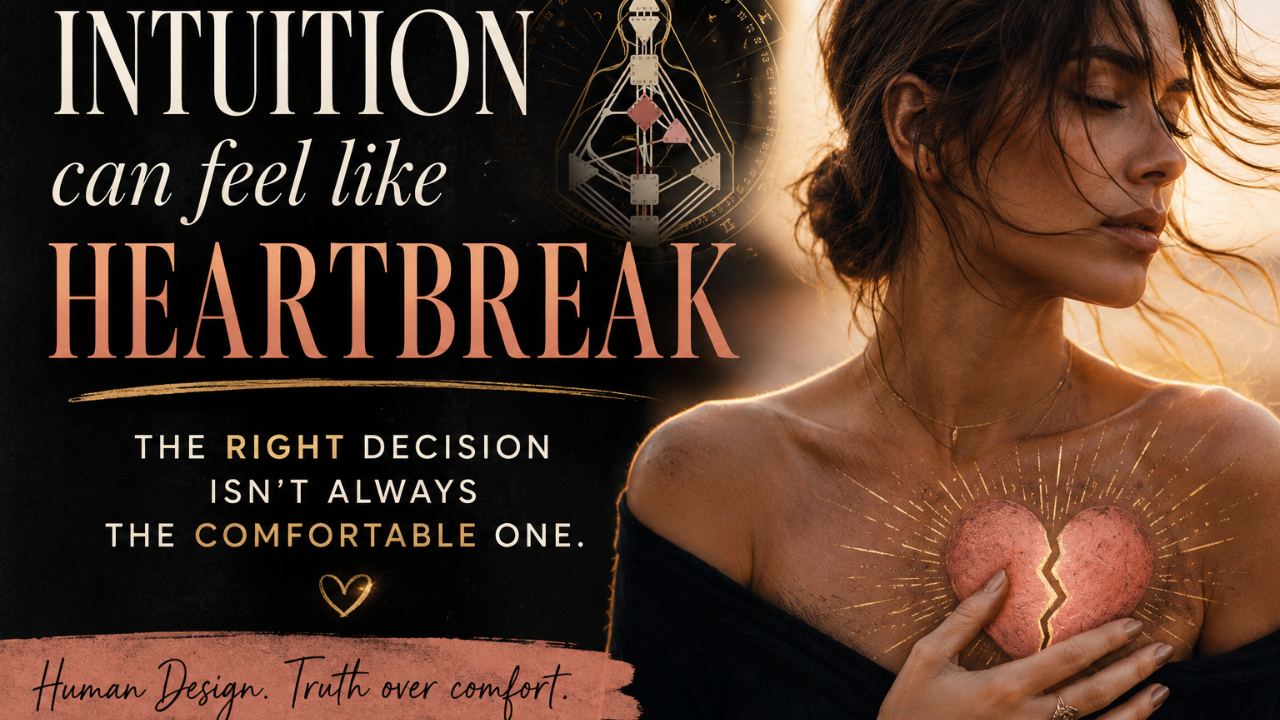
Do you know that feeling — when part of you already knows, and the knowing itself is the hardest part?
You’re not confused about what’s true. You’re just not sure you can bear it.
Maybe it’s a relationship you’ve outgrown. A business you’ve built that no longer fits the person you’ve become. A city, a friendship, a version of your life that made sense once — and quietly stopped making sense somewhere along the way.
Your inner knowing has already spoken.
And it’s breaking your heart.
If that’s where you are right now, here’s the most important thing I want you to remember:
Just because a transition is painful and heartbreaking does not mean that it’s wrong.
One of the biggest misconceptions I see in Human Design is the belief that aligned decisions are supposed to feel good.
That if you’re following your Strategy and Authority correctly, you’ll feel peaceful, certain, excited, or somehow reassured that you’re on the right path.
But that’s not actually what alignment feels like.
Alignment is not the absence of discomfort.
Alignment is the willingness to move toward what is true, even when every conditioned part of you wants to run the other way.
What the research actually says about growth and discomfort
Here’s something positive psychology has been documenting for decades, and it runs directly counter to the “alignment should feel good” myth:
Psychologists Richard Tedeschi and Lawrence Calhoun spent years studying what happens to people after significant life upheaval — loss, ending, transition, the dismantling of what was. What they found was a phenomenon they named Post-Traumatic Growth: the experience of meaningful positive change that emerges specifically through the struggle with difficult life events. Not despite it. Not after it’s safely over. Through it.
Their research identified five domains where this growth tends to manifest:
-
A deepened appreciation for life
-
More meaningful relationships
-
A stronger sense of personal strength
-
Shifted priorities,
-
And a richer inner life.
Importantly, they noted that PTG and psychological distress don’t cancel each other out — they can, and often do, coexist. You can be in real pain and be growing. The discomfort isn’t evidence you’re on the wrong path. Sometime, it’s evidence you’re finally on the right one.
Growth, in their framework, doesn’t come from the difficult event itself. It comes from the struggle to make meaning out of it — which means the grief is not a detour. The grief is the path.
Your Inner Authority/ Intuition May Know. Your Nervous System May Not Care.
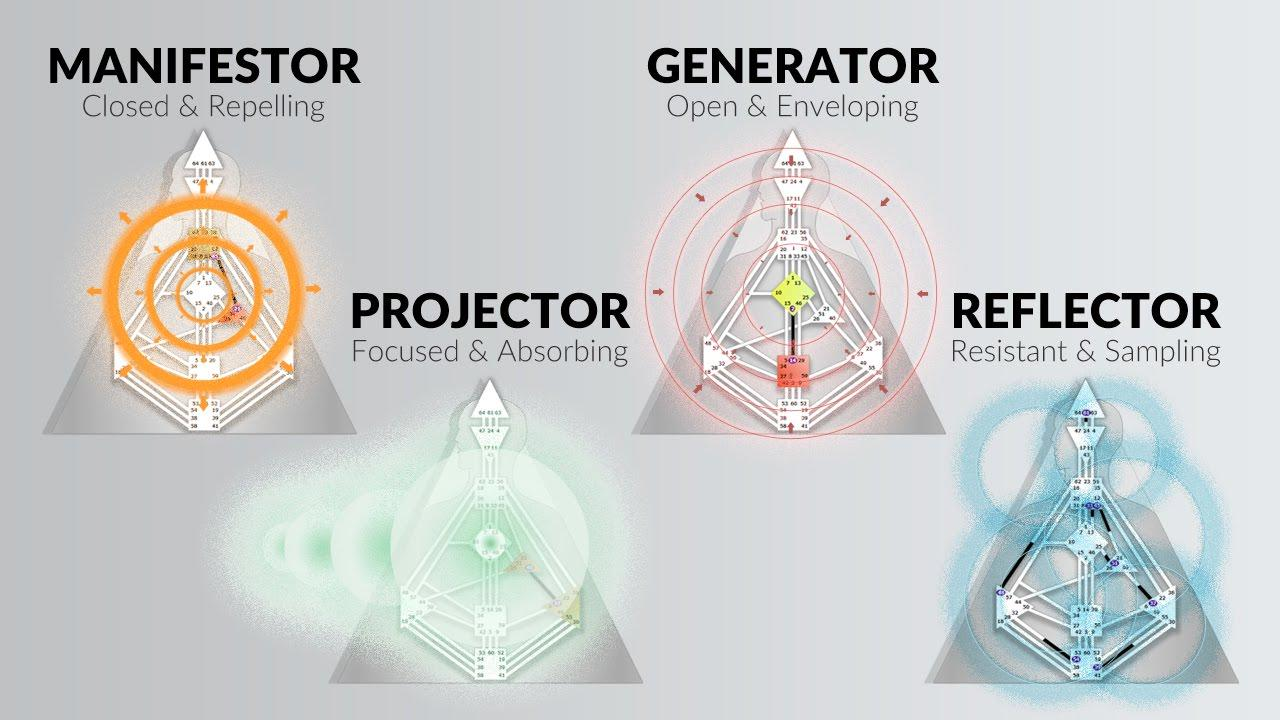
This is the piece that gets missed in almost every Human Design conversation I see. The misconception that gets passed around in Human Design & spirituality spaces is this: if you’re on path, it will feel like a “full body hell yes”. It will feel good. Maybe even exciting. And if you feel fear, doubt, or grief — that’s a sign you’re off track. That’s a sign the decision is wrong.
That is not how this works.
And understanding why requires us to talk about what your nervous system is actually doing when you’re standing at the edge of a true, aligned, deeply right decision.
Your nervous system is a pattern recognition machine. It doesn’t operate on truth. It operates on history. It learns to associate certain environments, relationships, and choices with safety or threat — and those associations don’t update just because you started learning Human Design. They don’t update because you had a spiritual awakening. They don’t update because you intellectually understand that this situation is no longer serving you.
They update through lived experience. Slowly. Over time. And by the time it catches up you are growing, healing, and evolving yet again.
So if your current reality has historically felt like safety — even if you weren’t fully happy, even if you weren’t flourishing, even if you were quietly shrinking — your nervous system has filed that away as known, therefore safe.
And here’s the thing we need to sit with: safety and happiness are not the same thing. Safety and flourishing are not the same thing. You can be completely misaligned and feel completely safe, because your nervous system isn’t measuring your joy. It’s measuring your familiarity.
So when your inner authority finally speaks — when it says it’s time to go, it’s time to leave, it’s time to become something your current life doesn’t have room for — your nervous system reads that as a threat. Not because the decision is wrong. Because leaving the known is, by definition, the unknown. And the unknown triggers the pattern recognition machine every single time.
This is why surrender and inner authority can feel terrifying even when they’re exactly right. You’re not broken. You’re not off path. You’re not misreading your authority.
You’re just being asked to move toward something your nervous system has no prior evidence is safe.
That’s not a red flag.
That’s the whole thing.
The ACT framework and what it has to do with your inner authority
Acceptance and Commitment Therapy — one of the most well-researched psychological frameworks we have — is built on a deceptively simple premise: psychological flexibility is the capacity to move toward what matters, even when it’s uncomfortable.
ACT doesn’t ask you to feel good about hard decisions. It asks you to create what researchers call “psychological space” around your difficult emotions — so those emotions stop running the show. Research on ACT and grief specifically found that this approach helps people reconnect with their values and act in accordance with them while they are still grieving — not after the grief is resolved, but alongside it.
That’s the Human Design translation: your authority speaks from your values. The grief, the fear, the heartbreak — those are your conditioned responses to the change the decision requires. It is the response of the mind finally, for the first time, losing control over your life. Both things can be true at once. The decision can be right and it can hurt.
Deeply.
What the question actually should be
Not “does this feel comfortable?” or “am I lit up?”.
That’s asking your conditioning for permission. Ra Uru Hu used to say “the mind is the spokesperson for our openness”.
Not: Am I at peace with this?
Peace often comes after, not before.
The better question is: Do I know this is true?
And underneath that: Can I stay with myself long enough to hear the answer?
Because the Radical Happiness Movement was never built on the idea that happiness means feeling good all the time.
That’s not happiness.
That’s emotional management.
Radical Happiness is the courage to remain connected to yourself through the full spectrum of the human experience.
Joy.
Grief.
Relief.
Fear.
Excitement.
Heartbreak.
All of it.
With no judgement.
Sometimes the most aligned decision of your life will also be the most painful.

Not because it’s wrong.
Because a version of you is dying.
Because a dream you carried for years is asking to be released.
Because the future you imagined is no longer the future you’re being called toward.
Because so much of your sense of your stability, love, connection, success, dreams, and hope has been tangled up in the very thing you are moving away from.
Of course that hurts.
It should hurt.
You cared. You invested. You hoped. You loved.
The grief isn’t evidence you’re moving in the wrong direction.
Very often, grief is evidence that you’re finally telling yourself the truth.
The part no one talks about in Human Design spaces
Tedeschi and Calhoun also noted something important: growth doesn’t come from being pushed toward positivity. It comes from being allowed to sit fully inside the difficulty and make meaning from within it — not from above it, not from the other side of it.
The same is true here.
The point isn’t to reframe the grief or heartbreak.
The point isn’t to find the silver lining before it’s revealed itself.
The point is to let the grief be evidence of how much you cared — and let that be enough to trust the truth you already know.
Your authority already spoke.
You already know.
The question is whether you’re willing to let the discomfort be the cost of finally living it.
So if you’re standing at the edge right now
If you’re at the edge of a decision and wondering whether the fear, the sadness, or the heartbreak means you’re making a mistake — I want to offer a different possibility.
Maybe the pain isn’t a warning sign.
Maybe it’s grief.
Maybe it’s growth.
Maybe it’s the natural consequence of releasing a life that no longer fits.
The Radical Happiness Movement isn’t about building a life that protects you from discomfort.
It’s about building a life that is true enough that the discomfort becomes worth it.
Because eventually there comes a moment when avoiding the truth hurts more than living it.
And that’s usually when everything changes.
Ashley Briana Eve
https://www.ashleybrianaeve.com/
______________________________________________________
The Radical Happiness Movement is the philosophy underneath all of this work — that joy isn’t the absence of pain, it’s the presence of truth. If this landed for you, share it with someone standing at their own edge.
And if you’re ready to stop managing your nervous system and start living from it a great place to start is your Human Design bodygraph.
Learn your design HERE.
