Porsche Brand Strategy: The Power of the Ruler Archetype
Feb 20, 2026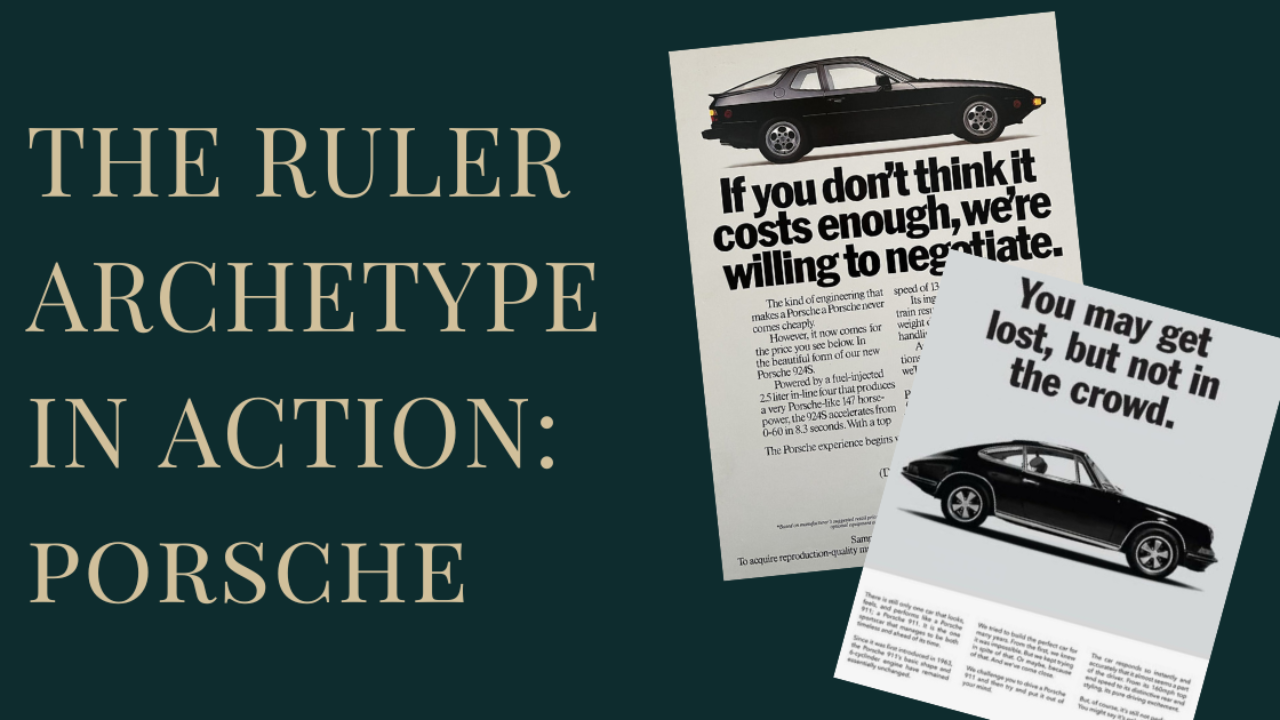
What never goes out of style is authority.
In periods of economic pressure, technological acceleration, and cultural volatility, many brands attempt to reinvent themselves in order to remain relevant. They soften their edges. They experiment with new identities. They attempt to broaden their appeal.
But the brands that endure do something far less reactive.
They deepen who they have always been.
Recent market behaviour has provided a clear contrast. Some legacy luxury brands, under pressure, have fractured their identity in pursuit of reinvention — demonstrating the shadow side of the Ruler archetype when authority becomes unstable. Others, like Porsche, have taken the opposite path. Rather than abandoning their archetypal foundation, they have refined it, strengthened it, and expressed it with even greater precision.
This distinction reveals a critical truth for organizations and leadership teams:
Strong brands do not survive by becoming something else.
They survive by becoming more fully themselves.
Archetypes Are Not Creative Exercises — They Are Strategic Infrastructure
Brand archetypes are often misunderstood as surface-level branding tools for colours or logos. In reality, they function as psychological infrastructure.
They shape how an organization communicates, how leadership behaves under pressure, and how customers interpret every decision the brand makes.
This matters because purchasing decisions are not purely rational. According to research published in the Harvard Business Review, emotionally connected customers deliver more than twice the lifetime value of customers who are merely satisfied. Edelman’s Trust Barometer has similarly demonstrated that trust and perceived stability are among the strongest drivers of long-term brand loyalty.
Archetypes accelerate trust because they create psychological clarity. They answer a subconscious question every customer is asking:
Who is this brand, and can I rely on it to remain that way?
When that answer is consistent, trust compounds. When it becomes unpredictable, trust erodes.
This extends beyond customers. Within organizations, archetypal clarity strengthens leadership communication, accelerates decision-making, and creates cultural stability. Teams operate more effectively when they understand the role the organization plays — not just in the market, but in the psychological landscape of their customers.
Archetypal clarity reduces internal friction and external confusion.
Porsche: Archetypal Discipline and the Power of the “Cheeky Ruler”
Porsche’s longevity is not simply the result of engineering excellence. It is the result of archetypal discipline — and, more importantly, archetypal depth.
For decades, Porsche has consistently embodied the Ruler archetype: authority, mastery, status, and control. But what makes Porsche particularly instructive is that it has never reduced the Ruler to a caricature. It has never portrayed authority as cold, rigid, or emotionally distant. Instead, Porsche demonstrates something far more sophisticated: the Ruler archetype expressed with nuance.
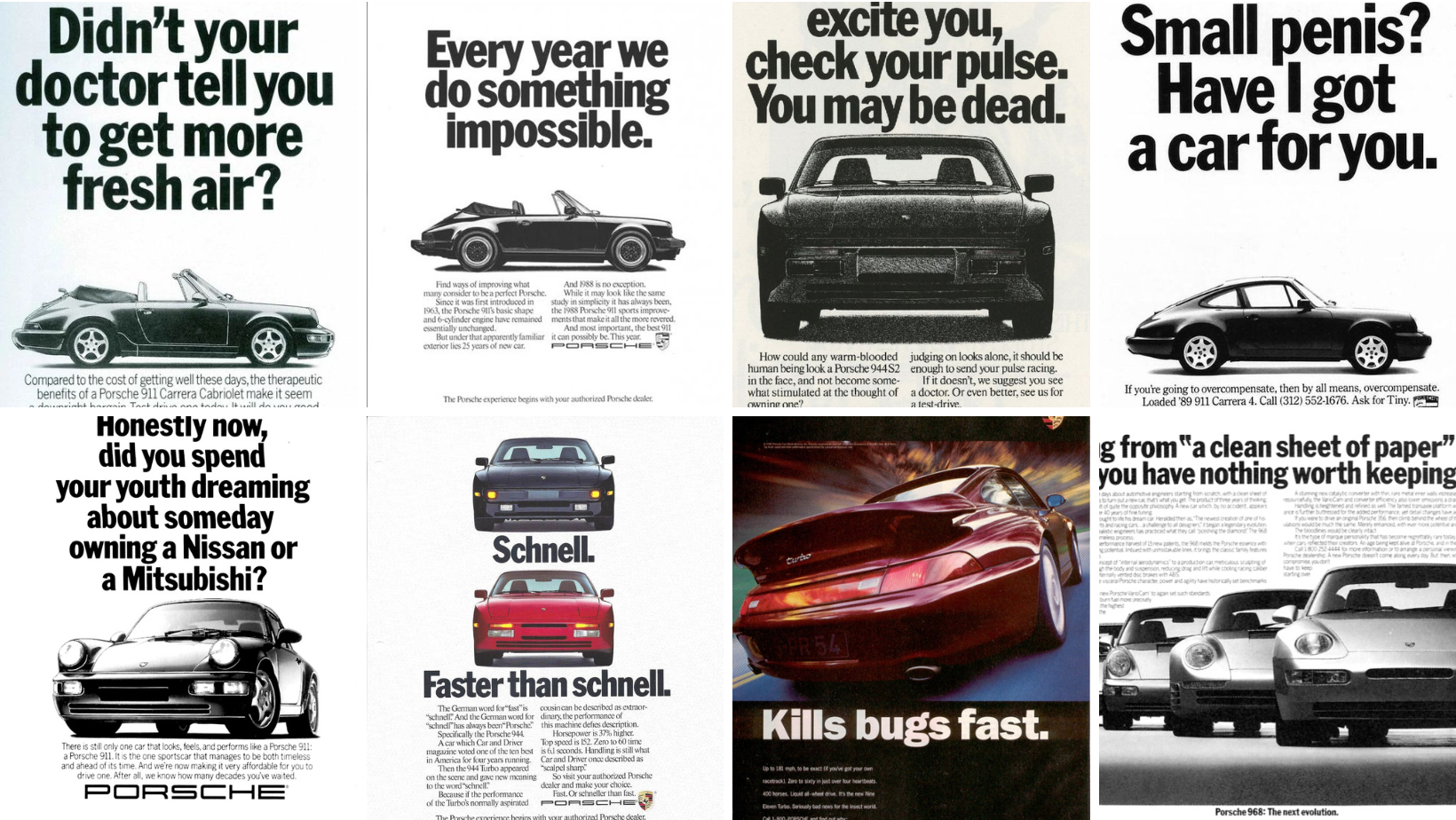
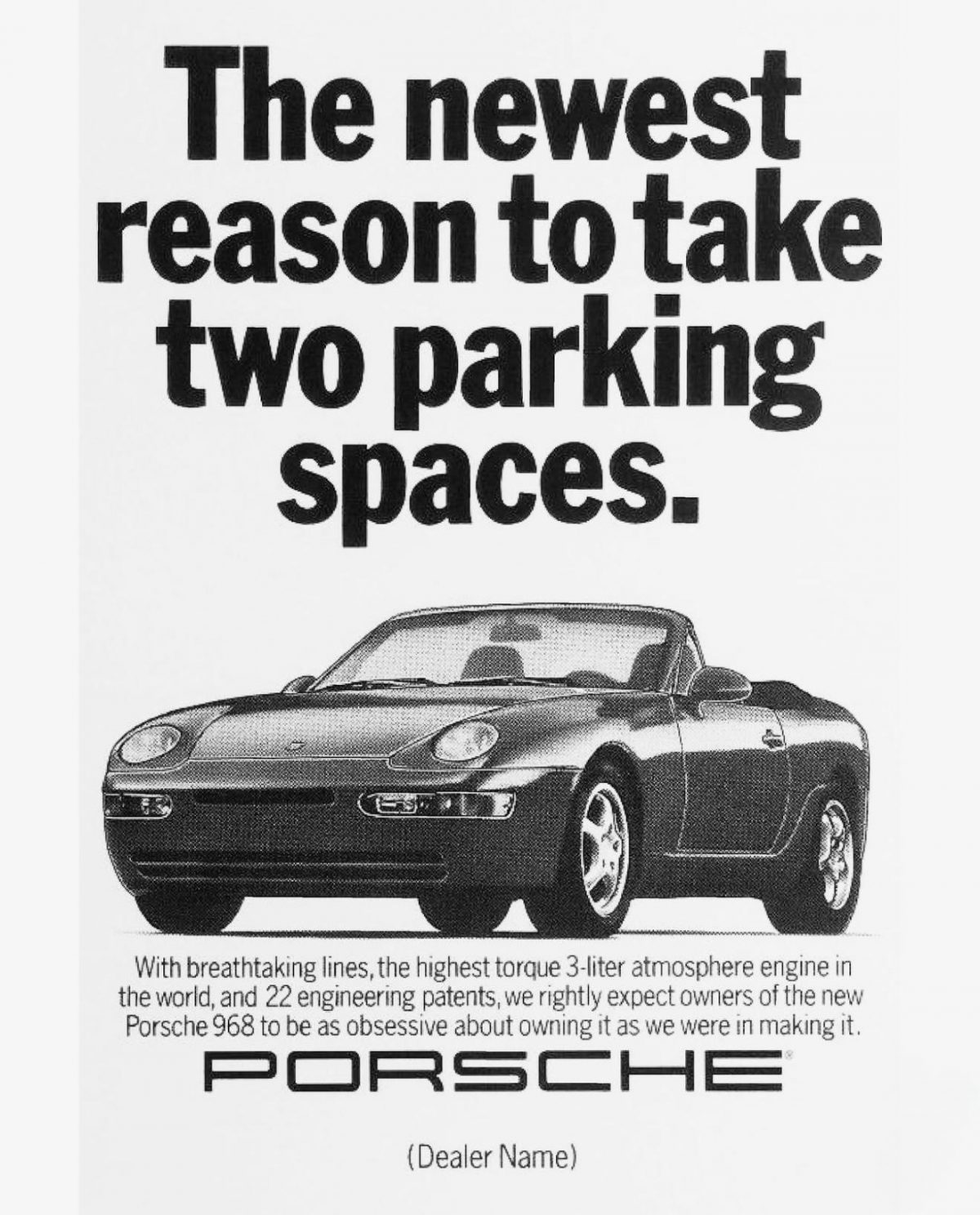
Their advertising frequently reveals , what I like to call, the “cheeky Ruler."
Consider the line:
“Ride out the recession a little faster than everyone else.”

Rather than acknowledging economic uncertainty with hesitation, Porsche reinforces authority. The message does not attempt to justify the purchase. It assumes the buyer operates above the instability of the moment.
Another advertisement states:
“You may get lost, but not in the crowd.”

This captures a core function of the Ruler archetype: distinction without insecurity. The message is not about rebellion or disruption. It is about standing apart through status, mastery, and self-possession.
Even Porsche’s more playful lines —
“The ultimate Porsche. Isn’t that redundant?”

— reinforce confidence rather than undermine it.
These statements carry quiet confidence. They do not beg for validation. They do not apologize for who they are. They do not attempt to prove superiority. They assume it.
But they also introduce levity.
This distinction matters. Porsche is not abandoning authority by introducing humour. It is demonstrating comfort within authority. When authority is fully embodied, it does not need to constantly reinforce itself through seriousness. It can afford restraint. It can afford wit.
This is where many organizations misapply archetypal frameworks. They treat archetypes as rigid templates rather than psychological territories. The result is branding that feels exaggerated, performative, and ultimately unstable.
Archetypes are not costumes. They are positions.
The goal is not to imitate authority. The goal is to inhabit it.
Porsche demonstrates that archetypal strength does not come from narrowing expression. It comes from deepening it.
This demonstrates a crucial point for organizations: archetypal strength does not require emotional flatness. Authority can express nuance, humour, and charm without sacrificing its core identity.
This is not archetypal blending (Do not even get me started on the idea that you can have multiple brand archetypes). It is archetypal depth.
Strategic Awareness: Study Both What Your Competitors Say — and What They Don’t

There is another critical lesson embedded in Porsche’s execution, particularly for emerging companies and growing organizations.
When building a brand grounded in a specific archetype, it is essential to study how others in your category communicate. Established companies have invested millions — often billions — into market research, psychological testing, and message refinement. Their communication patterns reveal how authority, trust, and aspiration are expressed within that category.
This creates a baseline understanding of the psychological expectations of the audience.
But differentiation does not come from imitation. It comes from identifying what remains unexpressed within the archetype itself.
This requires studying not only what competitors are saying, but what they are not saying.
Porsche did not become distinctive by rejecting the Ruler archetype.
It became distinctive by expressing the Ruler archetype more fully than its competitors.
This principle applies across industries. Archetypal clarity provides the foundation. Competitive awareness defines the landscape. But authority emerges from depth — from exploring the full emotional range available within the archetype.
This is where brands transition from recognition to leadership.
Why This Matters for Organizations and Teams
Brand archetypes are not marketing accessories. They are leadership tools.
They shape how organizations behave under pressure. They guide communication during uncertainty. They create consistency that customers and employees can rely on.
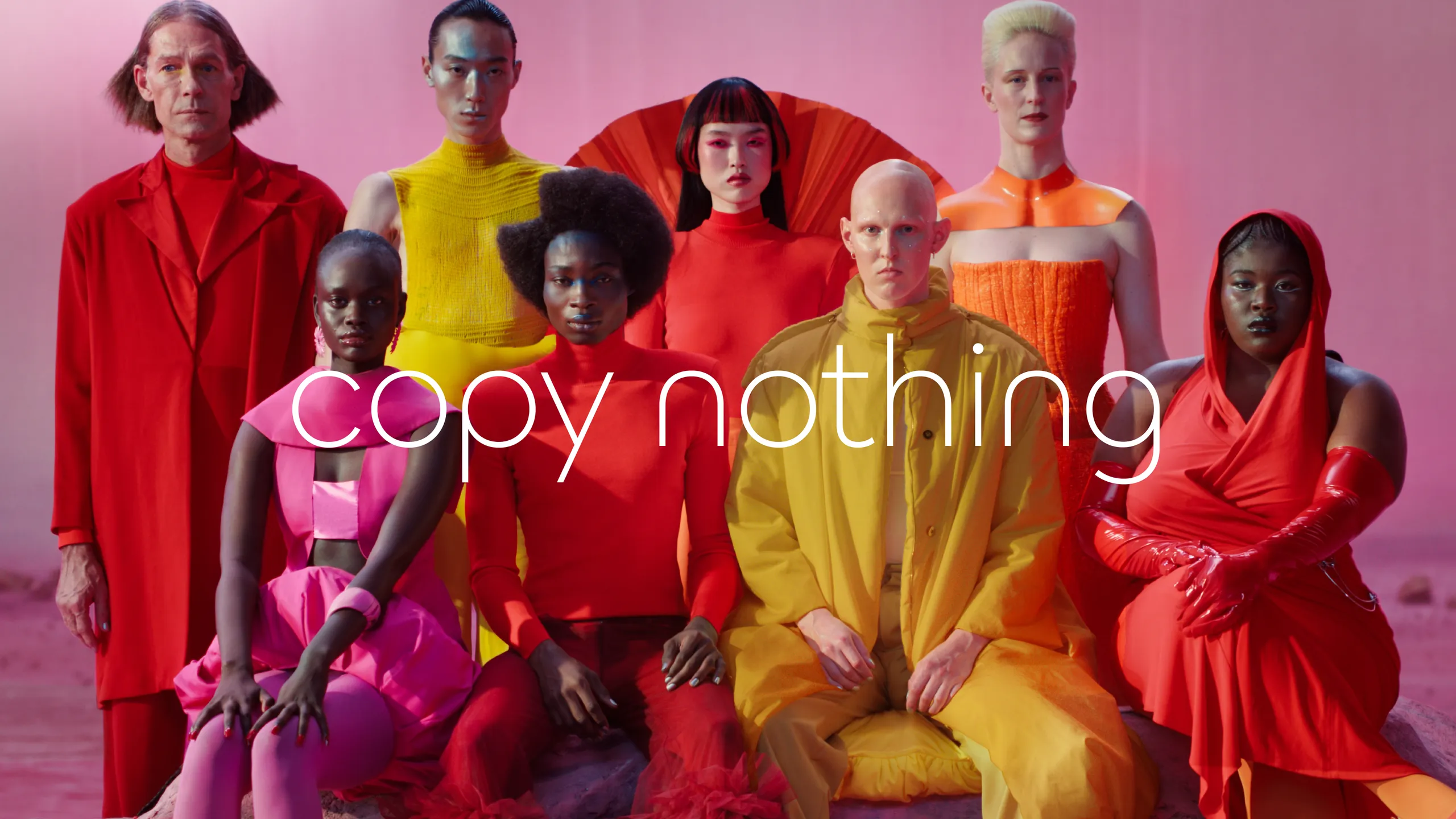
Organizations without archetypal clarity often react to market volatility by shifting identity — adjusting messaging, tone, and positioning in response to perceived external pressure. This creates instability both internally and externally.
Just ask Jaguar.
Organizations with archetypal clarity operate differently.
They refine. They strengthen. They reinforce.
This creates psychological stability, which is the foundation of trust.
Trust compounds into loyalty. Loyalty compounds into authority.
Porsche’s longevity demonstrates that strong brands do not maintain leadership by constantly reinventing themselves. They maintain leadership by expressing their identity with increasing precision over time.
In volatile markets, identity is not a constraint.
It is a strategic advantage.
A Final Note: Market Pressure Does Not Equal Brand Irrelevance
It would be easy to look at Porsche’s global sales decline in 2025 and misinterpret it as a signal of weakening brand power. That conclusion would miss the larger strategic reality.
The decline was driven primarily by structural shifts in the Chinese automotive market, increased domestic competition, and broader economic pressure affecting nearly every luxury manufacturer. It was not the result of brand instability or loss of archetypal authority.
What matters more than the decline itself is how Porsche responded.
They did not dilute their identity.
They did not reposition themselves to chase accessibility.
They did not abandon the psychological territory they have spent decades establishing.
They maintained their position.
This is an important lesson, particularly for founders and growing organizations.
Many entrepreneurs believe that once a brand is established, its position is secure. In reality, brand authority must be continuously reinforced. Markets evolve. Competitors advance. Entire industries transform.
2025 served as a recalibration year across sectors — from luxury automotive to consulting, coaching, and digital education. Economic tightening, increased competition, and technological acceleration forced organizations to confront weaknesses in their positioning and differentiation.
Periods like this do not weaken strong brands.
They reveal them.
The organizations that will lead in the next cycle of growth will not be those that fragmented their identity under pressure. They will be those that refined it. Those that went deeper into what made them trusted, distinct, and irreplaceable.
Authority is not built during ease.
It is proven during pressure.
And the brands that understand this are the ones that endure.
ashley
https://www.ashleybrianaeve.com/
