
Bizarre Dancing Plague of 1518: Was it Disease or Mass Hysteria?
Aug 17, 2026
It’s a beautiful, sunny afternoon. The market stalls are bustling, the normal sounds of daily life fill the town. But as you cross the cobblestone square, you notice a woman dancing.
There’s no music. No festival. No celebration. She’s just dancing.
At first you might smile — a private moment of joy. But get closer and the scene falls apart. Her eyes are blank, glassy, staring at nothing. Her limbs aren’t moving gracefully; they’re twitching, jerking her forward again and again. She isn’t performing. She’s trapped. As she spins past you, you realize she isn’t laughing. She’s sobbing. Begging someone, anyone, to make it stop. Her feet won’t listen.
And then you feel it — a violent twitch in your own leg. A pull you can’t rationalize. Before you know it, you’re stepping onto the cobblestones too.
You start dancing.
This sounds like a horror movie. It isn’t. In the summer of 1518, in the city of Strasbourg, this actually happened. Hundreds of people danced themselves to death — and the government’s official medical cure didn’t save them. It made things infinitely worse.
This is the Dancing Plague of 1518.
A City Already Broken
To understand how Strasbourg lost its mind to a rhythm no one could hear, you have to understand what the city was living through before a single foot ever hit the ground.
By July 1518, the region had endured consecutive years of catastrophic crop failures. Food prices had rocketed out of reach. Families were starving, streets full of the homeless and desperate. On top of that, Strasbourg was a breeding ground for disease — smallpox, syphilis, and a brutal outbreak of typhus were tearing through the population. People were burying their children, their parents, their neighbors, over and over.
Layer onto that a deeply spiritual, deeply fearful worldview. In 1518, bad things weren’t bad luck — they were divine punishment. The devil was a physical presence lurking in the dark. God’s wrath lived in every empty stomach.
That was the pressure cooker a woman named Frau Troffea stepped into when she walked out her front door in mid-July and started to dance.
One Woman, Then Thirty, Then Hundreds
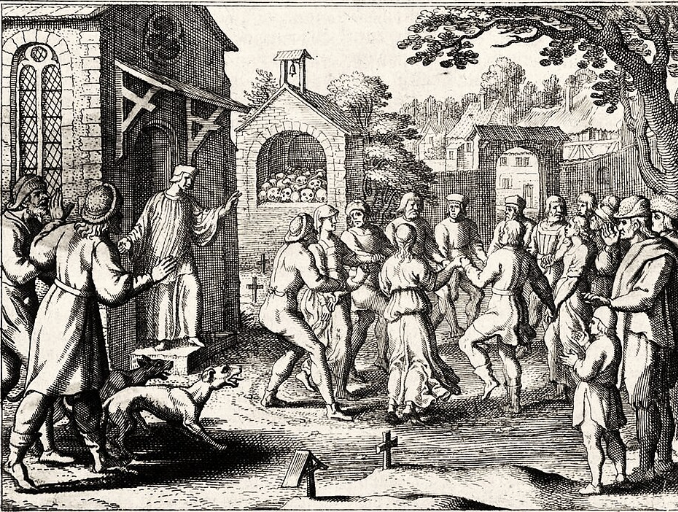
No one knows exactly what triggered her — grief, hunger, a snap in the mind. But she moved into a narrow cobblestone street with no instrument, no music, no one clapping, and she began to dance.
Hours passed. Her husband begged her to come inside. She ignored him. Night fell, the temperature dropped, and she kept going. By morning she was still dancing, drenched in sweat, her face a mask of exhaustion.
One day became two. Two became a week. By the time her feet were shredded and bloody, she’d been dancing continuously for nearly seven days.
Then it spread. Within days, a handful of onlookers stepped into the street and were caught in the same involuntary spasm. By the end of the week, more than thirty people were dancing. By August, it was hundreds.
City chronicles from 1518 describe a literal epidemic. Dancers were dying of strokes, heart attacks, sheer exhaustion. Some historical sources put the death toll at up to fifteen people a day at its peak — meaning residents were stepping over the dying bodies of their neighbors just to fetch water, while others danced around them, weeping, unable to stop.
The city was desperate. So they called in the era’s best medical minds. That’s when things went from tragic to genuinely insane.
The “Cure” That Made It Worse
Doctors examining the dancers weren’t working from a supernatural framework — they were working from humoral theory, the belief that the body ran on four fluids that had to stay in balance. Their diagnosis: hot blood. The dancers’ brains were overheating, and the only way to release that heat was to sweat it out.
Their solution: don’t stop them. Keep them dancing until the fever broke.
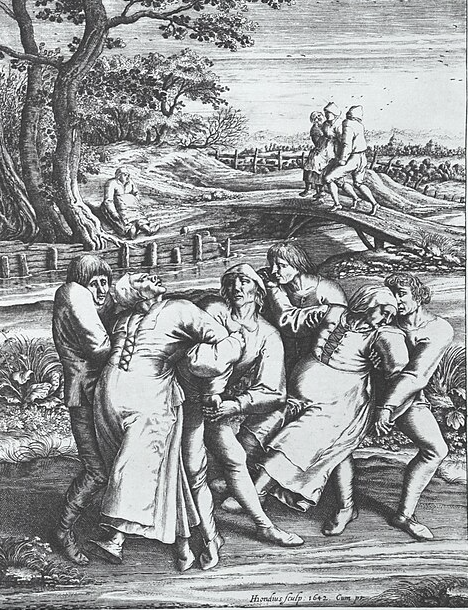
Try to picture a modern doctor telling someone in cardiac arrest to go run a marathon to cure themselves. That’s essentially what the Strasbourg city council was told, and they took it as gospel.
So the government didn’t isolate the sick. It built them a stage.
Literally — massive wooden platforms went up in the town squares so the public could watch the “cure” in action. When the dancers started losing rhythm from exhaustion, the council hired professional musicians — drummers, fiddlers, horn players — and had them play a relentless, pounding beat around the clock. When dancers’ knees buckled, hired “handlers” grabbed them, hoisted them upright, and physically kept their limbs moving.
The government believed they were treating an illness. What they’d actually built was a machine for manufacturing more of it.
Trauma and starvation make minds suggestible. When terrified citizens watched the state build stages, hire musicians, and turn this affliction into a spectacle, the psychological effect was catastrophic. The music and the platforms acted like a magnet — the drumbeat locked into panicked heartbeats, and dozens of new people threw themselves into the crowd every day. The cure accelerated the death toll.
The Red Shoes
By mid-August, the council realized the mistake. The stages were slick with blood. The musicians were exhausted. The “hot blood” theory had failed catastrophically.
So they reversed course entirely — tore down the stages, fired the musicians, and banned all public dancing and music, citywide, for everyone. Play an instrument in public and you were fined. Dance at your own wedding and you could be arrested.
But the hardest cases — the people who’d been dancing for weeks — were still moving. Their minds were locked into a loop that silence alone couldn’t break.
So the authorities pivoted from medicine to religion. Church lore pointed to Saint Vitus, a Christian martyr who, before his execution, had prayed God would protect anyone who danced in his honor. Over time, that story flipped in the popular imagination: anger Saint Vitus, and he’d curse you with an unstoppable dancing affliction.
The council decided Strasbourg had offended the saint — and if it was a curse, medicine couldn’t fix it. Only ritual could.
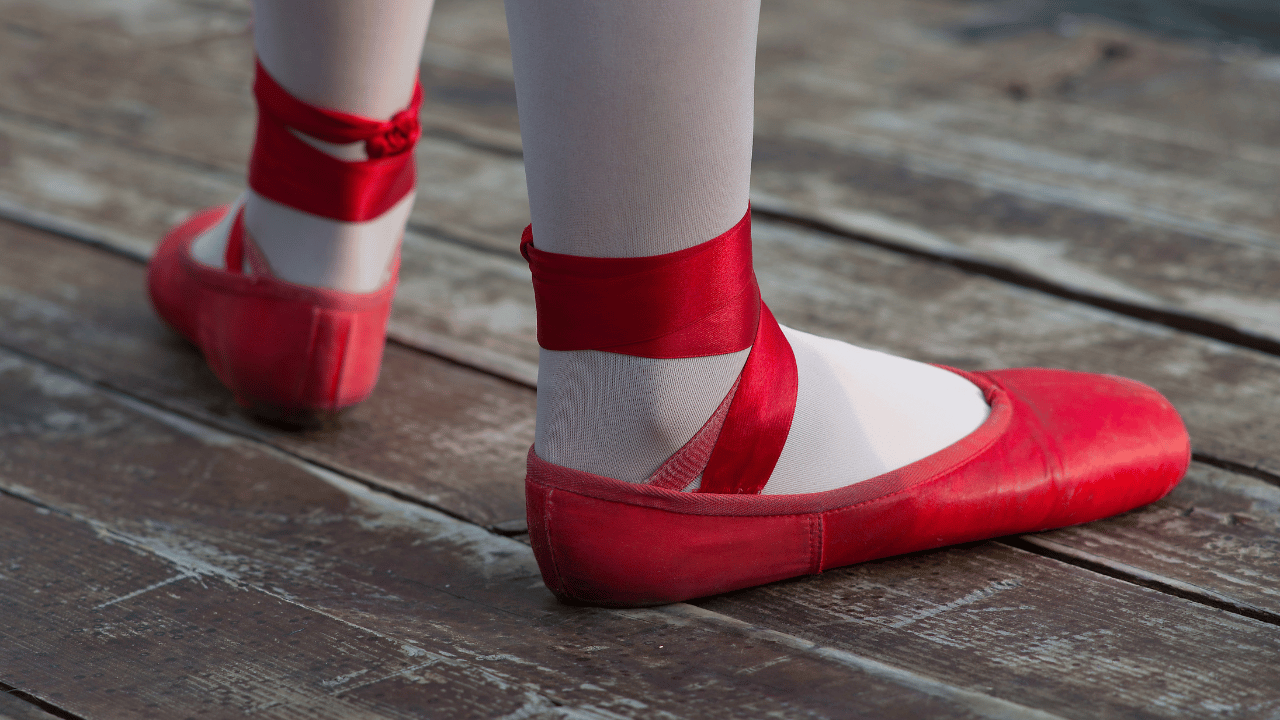
Guards loaded the remaining dancers — emaciated, sore-covered, feet rotting from weeks of trauma — into wagons and hauled them into the Vosges Mountains to a stone shrine dedicated to Saint Vitus. Priests forced small lead crosses into their trembling hands, then pulled blood-red leather shoes onto their mangled feet, sprayed them with holy water, chanted in Latin, and marked their foreheads with oil.
And then — it worked. Within days of the ritual, the spasms stopped. The blank stares faded. By September 1518, the dancing plague was over.
The survivors were left scarred and traumatized, with no memory of why they’d danced at all.
So What Actually Happened?
Historians and scientists have argued over this for centuries, and it comes down to two competing theories.
The ergotism theory. Ergot is a toxic fungus that grows on rye in damp seasons, and it’s chemically similar to LSD. Eat bread made from contaminated rye and you can experience hallucinations and severe muscle spasms — historically called “Saint Anthony’s Fire.” It’s a tidy explanation. But it has a major hole: ergotism cuts off blood flow to the extremities and causes gangrene. Anyone with enough ergot in their system to convulse for days would be losing fingers and toes, not dancing marathons for weeks. It also doesn’t produce the kind of sustained, coordinated physical stamina hundreds of people displayed.
Mass psychogenic illness — collective hysteria. This is where most modern historians land. Strasbourg in 1518 was a population under a level of psychological pressure the human mind isn’t built to absorb: starvation, mass death, and a genuine belief that God was actively punishing them. When that pressure becomes unbearable, the mind can look for an exit. Frau Troffea’s breakdown happened first — but because everyone around her shared the same trauma, the same fear, and the same cultural belief in the Saint Vitus curse, her collapse became a blueprint the rest of the city’s nervous systems could follow. It’s a dissociative trance state spreading through shared suggestion and shared terror — the mind disconnecting from the body’s limits so completely that people couldn’t feel their own hearts failing.
Under enough pressure, stress stops behaving like an emotion. It behaves like a pathogen.
The Rhythm Never Really Left
We like to look back at 1518 and feel superior — laugh at the hot blood theory, the red shoes, the wooden stages. But mass hysteria didn’t stay in the Middle Ages. It shows up in echo chambers, in sudden collective panics, in the speed at which fear can move through a crowd today.
The rhythm is still out there. It’s just waiting for the right amount of despair for the music to start again.
Next time you’re walking down a quiet street on a beautiful day and you see someone moving to a beat you can’t hear —
maybe keep walking.
ashley
For the full experience watch this on YouTube HERE.
