The Cult Playbook: How Branding Psychology Built the Swifties, Heaven’s Gate, and NXIVM
Apr 04, 2026
There’s a moment in every cult documentary where someone says, “I didn’t realize I was in one until I was already out.” The recruitment didn’t look like recruitment. The control didn’t feel like control. It felt like belonging.
That’s not an accident. It’s a system. And the uncomfortable truth that anyone who works in branding and marketing will recognize is this: cult mechanics and brand mechanics are built from the same psychological blueprints. The difference, usually, is intent and degree.
Usually.
When people started talking about Swifties in the same breath as cult behaviour, a lot of the discourse got dismissed as hyperbole — the kind of hot take from “haters” designed to provoke. But if you actually pull apart the psychology of what’s happening inside that fandom, you’re not looking at hyperbole. You’re looking at a textbook.
What Cults and Brands Both Sell
Strip a cult down to its bones and you’ll find it’s not really selling theology. It’s selling three things: identity, community, and certainty. A place to belong. A story about who you are. And an enemy — real or perceived — that makes the in-group feel righteous for protecting itself.
Now look at the strongest consumer brands in the world. Apple. Nike. Peloton. Harley-Davidson. They’re not selling products either. They’re selling the same three things. This isn’t a conspiracy — it’s basic brand psychology, and it’s why marketing degrees spend entire semesters on tribal consumer behaviour.
Robert Cialdini’s Influence, Leon Festinger’s cognitive dissonance research, Henri Tajfel’s social identity theory — the academic infrastructure behind cult behaviour is the same infrastructure that informs how premium brands cultivate loyalty. The mechanics transfer because human psychology doesn’t change based on what it’s pointed at.
Branding Psychology isn’t inherently negative. It’s how you know you found your “people”. But what happens when it crosses a line? That's what we are going to discuss here.

The cult doesn’t feel like a cult from the inside. It feels like finally finding your people. That’s not weakness — that’s neuroscience. And it’s exactly what the best brand architects in the world know how to build
The Cult Mechanics Running Inside Your Favourite Brand
IDENTITY FUSION (US VS. THEM ARCHITECTURE)
Every powerful cult creates a boundary between the enlightened in-group and the unenlightened outside world. Great brands do the same thing — they don’t just tell you what to buy, they tell you what kind of person you are for buying it. “Think Different.” You’re not just a Mac user. You’re not like the others.
THE MYTHOLOGY OF THE LEADER
Cult founders are almost always positioned as chosen, exceptional, cosmically different from ordinary people. Brand founders are packaged the same way — the origin story, the vision, the suffering before the breakthrough. It’s hagiography dressed as a LinkedIn bio.
MANUFACTURED SCARCITY AND URGENCY
Cults use fear of missing out on salvation. Brands use fear of missing out on access or limited drops. Both mechanisms trigger the same dopamine-and-cortisol cocktail that makes people act before they think.
Urgency is a cognitive bypass.
LOVE BOMBING AS ONBOARDING
New cult recruits are overwhelmed with warmth and belonging — it’s called love bombing, and it creates a powerful emotional anchor. High- performing brands do a version of this in their customer onboarding, their community welcome sequences, their early fan interactions. Make the newcomer feel seen, and they’ll remember the feeling more than the product.
LOADED LANGUAGE
Cults develop their own vocabulary that creates an insider/outsider divide and makes complex ideas feel simple and settled. Fandoms and brands do it too — the jargon, the insider references, the codes that signal membership. If you don’t know the language, you’re not one of us. This often bleeds over into Gamification (“Easter Eggs”).
THOUGHT-TERMINATING CLICHÉS
This is the one that should make every media analyst sit up straight. Cults train members to shut down critical thinking with a ready-made phrase whenever doubt surfaces. “That’s not for you to know yet.” “The outside world can’t understand.” Sound familiar? Because fandoms do this constantly — and often without realizing it.
The Swifties: A Narrative Autopsy

Let’s be precise about what we’re diagnosing here. The question isn’t whether Taylor Swift is a cult leader — she isn’t, in the literal sense of the word, and that’s an important distinction. The question is whether the system built around her fandom exhibits cult-adjacent psychological mechanics. And the answer to that, if you’re willing to look at it with clear eyes, is yes.
The Architecture of a $1B Fan Ecosystem
Taylor Swift’s brand architecture is genuinely sophisticated — one of the most carefully engineered parasocial systems in modern pop culture. The Easter eggs. The album eras as identity pivots. The deliberate cultivation of a sense that Taylor communicates directly with you. It’s not accidental. It’s a masterclass in fan relationship management — and it works, at scale, in ways that blur the line between fandom and something more consuming.
The Eras Tour didn’t just sell tickets. It sold identity artifacts (the outfits), community rituals (friendship bracelets), and a shared mythological event. That’s brand sacrament. That’s not cynicism — it’s observation.
The psychological mechanics running inside Swiftie culture map onto the cult checklist with uncomfortable precision:
Identity fusion: “I’m a Swiftie” isn’t a music preference. For many fans, it’s a core identity statement — one that predates, and often supersedes, individual critical thinking about the artist. When an identity becomes load- bearing, criticism of the object of that identity feels like a personal attack.
Because psychologically, it is.
Thought-terminating clichés: Any public figure who questions Taylor Swift’s business practices, her brand evolution, her political positioning, or her cultural impact will tell you the same thing: the response isn’t engagement. It’s obliteration. “You’re just jealous.” “You don’t understand her artistry.” “You’re not a real fan.” These aren’t rebuttals. They’re shutdown mechanisms— and they function identically to the thought-terminating language in documented cult behaviour.
Us vs. them architecture: The Swiftie in-group has an extraordinarily well-
developed enemy roster — critics, Scooter Braun, Kanye West, Ticketmaster, anyone who questioned the private jet usage, journalists who ask uncomfortable questions. Each external enemy reinforces internal cohesion.
This is classic cult sociology: the siege mentality that keeps members looking inward for validation instead of outward for perspective.
Parasocial intimacy weaponized as loyalty: The Easter eggs, the “just between us” mythology, the deliberate cultivation of the sense that Taylor sees her fans — this is extraordinarily effective parasocial engineering. It’s not inherently sinister. But when that engineered intimacy becomes the basis for policing behaviour — yours, critics, and other fans’ — you’ve crossed a line from fandom into something that functions more like doctrinal enforcement.
The fan who sends death threats to a journalist who criticized a setlist change isn’t acting out of love for the music. They’re acting out of a threat to their identity. The music became a surrogate self, and someone attacked the surrogate self. That’s not fandom. That’s fusion.
The Cult Case Studies: Heaven’s Gate & NXIVM
Before we talk about where the line is, we need to look at what happens when there’s no line at all. Because Heaven’s Gate and NXIVM aren’t just cautionary tales. They’re advanced courses in exactly how far these branding mechanics can go when they’re deployed without restraint — and when the people running them are either genuinely delusional, genuinely predatory, or some lethal combination of both.
CASE FILE 001 — HEAVEN’S GATE (1974–1997): The Rebrand That Killed 39 People

Most people know Heaven’s Gate as “the comet cult” — the group that died in matching Nikes waiting for a spacecraft trailing the Hale-Bopp comet to take them to the next evolutionary level. What most people don’t know is that Heaven’s Gate was a masterclass in iterative rebranding that ran for over two decades before the end.
Marshall Applewhite — “Do” — and Bonnie Nettles — “Ti” — spent years refining their message, testing recruitment language, and pivoting their mythology whenever it wasn’t landing.
They started with Christian framework, shifted to UFO cosmology, adopted the language of science and “human advancement” when it made the pitch more palatable to educated recruits.
This wasn’t theology. It was A/B testing with eschatology.
The brand mechanics they ran: Heaven’s Gate cultivated extreme visual uniformity (the matching outfits, the identical haircuts, the androgynous presentation) that functioned exactly like a brand uniform — stripping individual identity to reinforce group identity. They built an early-adopter internet presence in the 1990s, running a website and charging for their content, positioning themselves as digitally sophisticated at a moment when that alone conferred credibility. They offered a product — transcendence, escape from the “human container,” belonging to something cosmically special— and they kept optimizing the pitch until enough people bought it to sustain the organization for twenty-three years.
The key branding insight: Heaven's Gate sold exclusivity of truth. You didn't just join — you were among the few advanced enough to receive the real information. Every premium brand on earth uses a version of this positioning. The difference is that Do and Ti also controlled the exit.
What makes Heaven’s Gate genuinely instructive for brand analysts isn’t the tragedy — it’s the longevity. Twenty-three years is a brand lifecycle. The mechanics that kept people inside that system — manufactured meaning, insider knowledge, sunk cost compounded by identity investment, the promise that the outside world simply couldn’t understand what you understood — are the same mechanics that keep consumers loyal to brands that objectively don’t serve them. The scale of harm is incomparable. The psychology is not.
Heaven’s Gate didn’t recruit broken people. It recruited lonely, intelligent, meaning-hungry people — and then gave them a brand identity so total that leaving felt like self-erasure. That’s not a cult trick. That’s the aspiration of every lifestyle brand that has ever existed.
CASE FILE 002 — NXIVM (1998–2018): The MLM That Sold Self-Actualization
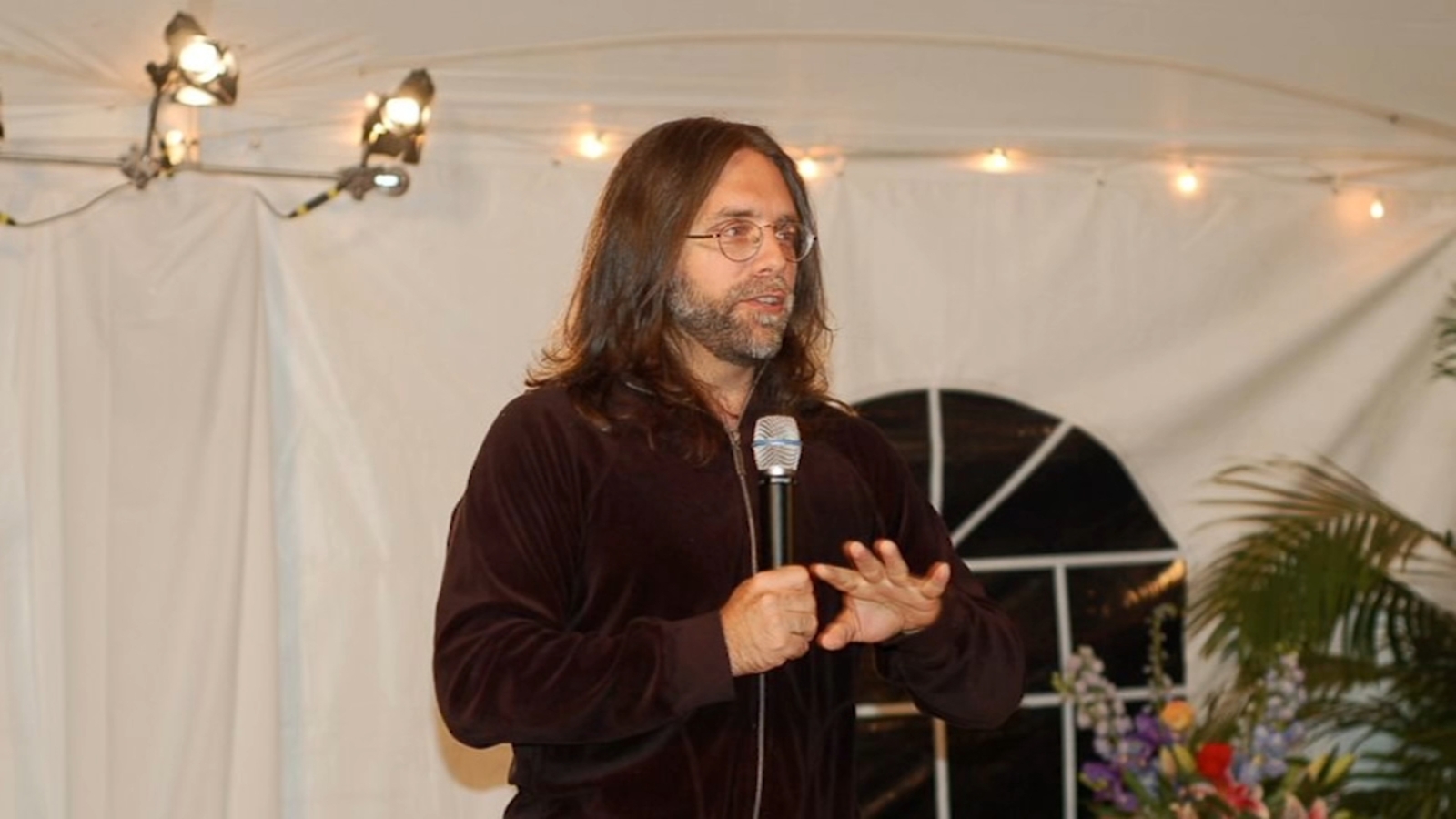
If Heaven’s Gate is the study in identity obliteration through cosmology, NXIVM is the study in identity capture through aspiration. Keith Raniere didn’t build a religion. He built a personal development company — and that distinction is everything, because it meant NXIVM’s front-facing brand was indistinguishable from the legitimate self-help industry it was parasiting.
Executive Success Programs (ESP) — NXIVM’s primary product — looked, on the surface, like an expensive but credible professional development curriculum. It used the language of cognitive behavioural therapy, neuro-linguistic programming, and business coaching. It attracted smart, ambitious, successful people — executives, actors, heiresses — precisely because the brand positioning was calibrated to signal intellectual rigor rather than spiritual surrender. You weren’t joining a cult. You were investing in yourself.
The brand mechanics they ran: NXIVM deployed a multi-level marketing structure — literally — that made members financially and socially invested in recruiting others. Every new recruit was a commission, a validation, and a proof point that your own investment wasn’t a mistake. The sash ranking system (white to green to proctor) was a loyalty rewards program with robes.
Each level unlocked new information, new status, new community access — a drip-feed of belonging that made leaving feel like giving up a membership with no refund policy.
The suppression technology: NXIVM had what they called “Ethical Breach” reporting — a mechanism where members were encouraged to report each other for violations of the organization’s ethical code. It was framed as community accountability. It was surveillance. And it functioned as the single most effective brand loyalty tool in the organization: when you’re responsible for monitoring others, you’re also constantly performing your own compliance.
The key branding insight: NXIVM never looked like a cult because it was packaged as a premium brand. The high price point ($2,000–$10,000 for intensive courses) wasn’t a barrier — it was a signal of quality. Expensive things are worth it. The people who can afford this are serious. You’re not being manipulated; you’re being selective. Price is a positioning tool, and Raniere used it to filter for exactly the demographic most likely to rationalize their own exploitation.
The NXIVM case is the most instructive for modern brand psychology because it happened entirely in plain sight, inside familiar frameworks, using the language of empowerment rather than obedience. The women in DOS — the secret sorority within NXIVM where branding and sexual coercion occurred — were told they were joining an elite sisterhood of strong women.
The branding was feminist. The reality was the opposite. That gap between brand promise and operational reality is the space where the most sophisticated cult mechanics live.
It’s also worth noting that NXIVM’s celebrity adjacency — Allison Mack, the Bronfman sisters, other high-profile members — functioned exactly like influencer marketing. Social proof from aspirational figures compressed the due diligence that might have caught the warning signs earlier. When someone you admire vouches for something, your critical faculty quiets.
That’s not weakness. That’s how social proof is designed to work.
Where Fandom Ends and Cult Behaviour Begins
Passionate fandom is normal, healthy, and one of the more beautiful things about how humans organize around shared meaning. Being moved by an artist, finding community in a fanbase, feeling protective of something you love — none of that is pathological.
The line gets crossed when five specific things start happening:
1. Criticism of the object becomes a personal threat. When a fan cannot distinguish between “I don’t like this song” and “I am attacking you,” the identity fusion has gone clinical.
2. Dissent inside the community is punished. Cults can’t tolerate internal questioning. When fan communities start policing other fans — you’re not a real fan if you don’t defend her on this — that’s thought control, not enthusiasm.
3. Loyalty is performed, not felt. When the metric becomes “how publicly and aggressively you defend,” you’re no longer in a fan community. You’re in a loyalty signalling hierarchy — which is indistinguishable from cult enforcement dynamics.
4. The artist’s behaviour becomes unquestionable. Healthy admiration can coexist with “but this particular choice troubles me.” When that sentence becomes impossible to say in a community, the community has moved from fandom to faith. And faith, by definition, is not subject to evidence.
5. Harassment is rationalized as protection. This is the one that matters most, and the one that got the Swifties in the cultural conversation we’re having now. When coordinated harassment campaigns against critics, commentators, journalists, or even other fans are framed as “protecting Taylor,” the community has adopted the logic of a security apparatus — and that’s not metaphor. That is the documented psychology of cult enforcement behaviour.
What This Means for Brand Builders
This is where it gets uncomfortable for anyone in the business of building brands with loyal communities — because the mechanics that create cult- like fandom are the same mechanics that create extraordinary brand loyalty.
The difference is in where you allow those mechanics to go.
Healthy brand community design builds identity and belonging without creating human enemies. It creates insider language without punishing outsiders. It cultivates connection to the founder without positioning the founder as infallible. And critically — it creates space for criticism and still feels safe, because the community’s identity isn’t so load-bearing that a single critique can destabilize it.
Cult-adjacent brand communities — whether by design or by accident — do the opposite. They need external human enemies to maintain cohesion. They can’t absorb criticism without defensive collapse. They confuse loyalty with uniformity. And when that community has numbers, reach, and a parasocial relationship with someone famous enough to make a bad actor feel righteous, the results are genuinely harmful.
The Taylor Swift machine didn’t set out to build this (or did they?). But the psychological architecture was optimized for devotion rather than discernment — and devotion without discernment is always, eventually, dangerous.
THE NARRATIVE VERDICT
Heaven’s Gate ended in 39 deaths. NXIVM ended in federal prison sentences. The Swifties end in coordinated harassment campaigns, attacking outsiders with vile messages (or worse) and journalists deleting their social media or unfavourable reviews.
Do not mistake this: These are not equivalent outcomes — but they are points on the same psychological continuum, powered by the same mechanics, aimed at the same fundamental human needs. And, in my opinion, we must be willing to discuss the dangerous line brands have the potential to cross with the abuse of branding psychology.
The difference between a fandom and a cult is not the psychology. It’s the ceiling on consequences. And ceilings, without structural accountability, have a way of rising.
Every cult in history had members who swore it wasn’t one. That’s not a coincidence. That’s the mechanism.
— Ashley Briana Eve
